Showing posts with label neurofeedback training New York. Show all posts

Monday, 1 June 2026

Alive Clinical for emWave & iFeel sensors


Alive Clinical for emWave & iFeel sensors

$400.00

transforming addition to your practice


Description

iFeel Sensor Benefits

  • Comfortable and Easy to Use Finger and Ear Sensors
  • Strong, Durable Design
  • Built-in Display Shows SpO2 and Average Heart Rate (allows you to monitor heart rate and SpO2 when not by a computer)
  • Bluetooth Wireless Connection (requires a computer with Bluetooth)
  • Includes USB Cable to Charge Battery
  • Runs for More Than 8 Hours On a Single Charge

Information for Professionals

  • Works with Alive, Alive Clinical and Alive Pioneer
  • Use at the same time as the GP8 Amp to train Smoothness of 2 users simultaneously, or to train iFeel Heart Rate or BVP Amplitude with GP8 Amp Skin Conductance, Temperature and EMG (Muscle Tension)
  • No Software Upgrade Cost for Owners of Alive
  • Display and Review SpO2 in Alive
  • Higher Accuracy and Fewer Movement Artifacts compared to IOM, Lightstone or emWave sensors
  • Train Heart Rate, Smoothness and BVP Amplitude (BVP Amplitude training requires Alive Pioneer)
  • Designed for hospital use. CE and ISO Certified, FDA Registered iFeel Sensor

 Buy Now this Product Click Here : Alive Clinical for emWave & iFeel sensors

Wednesday, 16 April 2025

Understanding Neurofeedback: Equipment, Training, and Professional Development

Neurofeedback is a cutting-edge technique used to train the brain to function more effectively, offering promising therapeutic benefits for a variety of conditions, including anxiety, ADHD, insomnia, and PTSD. By utilizing real-time feedback, neurofeedback allows individuals to learn to regulate brainwave activity, leading to improved cognitive function, emotional regulation, and overall well-being. As neurofeedback continues to gain popularity, the demand for trained professionals and the appropriate neurofeedback equipment has grown significantly. This article explores the essentials of neurofeedback, including the equipment used, the training required for technicians, and opportunities for professional development such as APA Continuing Education credits.

What is Neurofeedback?

Neurofeedback, also referred to as EEG biofeedback, is a process that measures brainwave activity and provides feedback to the individual to help them regulate their brainwave patterns. Through this feedback loop, individuals can learn to increase or decrease the amplitude of certain brainwave frequencies to promote optimal brain function. This non-invasive approach has been shown to have positive outcomes for a wide range of mental health and neurological issues.

During a neurofeedback session, sensors are placed on the scalp to monitor brainwave activity. The collected data is then sent to a computer system where it is processed and displayed in real-time, often as a visual or auditory cue. For example, the patient might be shown a video game or animation, where the game responds to their brain activity by speeding up or slowing down depending on their brainwave regulation.

The Role of Neurofeedback Equipment

At the core of every neurofeedback session is the neurofeedback equipment, which typically consists of EEG sensors, amplifiers, and software. The EEG sensors are the key components, as they detect electrical activity from the brain and send this data to a computer system for processing.

The quality of neurofeedback equipment plays a critical role in the effectiveness of the treatment. Modern neurofeedback systems feature advanced sensors that ensure accurate readings of brainwave activity, alongside sophisticated software designed to present the feedback in a way that is engaging for the patient. For example, there are different types of neurofeedback equipment suited for various purposes, from basic brain training to more specialized therapeutic uses such as neurotherapy for traumatic brain injuries or mood disorders.

When selecting neurofeedback equipment, it’s essential for practitioners to consider factors such as the number of channels (which corresponds to the number of areas of the brain being monitored), the software’s interface, and the overall usability and reliability of the system.

Read More...

For more invaluable resources, visit Neurofeedback Certification Training

Tuesday, 17 October 2023

Unveiling the Potential of Neurofeedback Equipment: Your Gateway to Mind-Body Wellness

Neurofeedback, also known as EEG biofeedback or brainwave training, is a non-invasive technique that measures brainwave activity and provides real-time feedback. This feedback can be used to help individuals gain better control over their brain functions, such as reducing stress, improving focus, and managing symptoms of various mental health conditions.

How Does Neurofeedback Equipment Work?

  1. Electroencephalogram (EEG) Sensors: The core of neurofeedback equipment is EEG sensors. These sensors are placed on the scalp to monitor electrical activity in the brain. The collected data is then processed and displayed on a computer screen in the form of real-time brainwave patterns.

  2. Real-Time Feedback: As the user engages in various tasks or activities, the neurofeedback software translates brainwave data into visual or auditory feedback. This feedback allows the user to see and understand their brain's activity, making it easier to learn how to self-regulate and optimize their brain function.

Benefits of Neurofeedback Equipment

  1. Stress and Anxiety Reduction: Neurofeedback can help individuals reduce stress and anxiety by training the brain to shift to more relaxed states, promoting emotional balance and better self-regulation.

  2. Improved Focus and Attention: For those struggling with attention disorders or general focus issues, neurofeedback can enhance concentration and cognitive performance.

  3. Enhanced Sleep Quality: Neurofeedback can help regulate sleep patterns, making it easier for users to achieve restful and restorative sleep.

  4. Emotional Regulation: Individuals with mood disorders can benefit from neurofeedback by learning to self-regulate their emotional responses.

  5. Cognitive Enhancement: Neurofeedback has shown promise in improving memory, problem-solving abilities, and overall cognitive function.

  6. Pain Management: Some studies suggest that neurofeedback can help individuals better manage chronic pain by altering their perception of pain.


Who Can Benefit from Neurofeedback Equipment?

  • Individuals with anxiety, depression, or other mood disorders
  • Those with attention disorders like ADHD
  • Athletes looking to improve their mental focus and performance
  • Students aiming to enhance their learning and concentration
  • People struggling with sleep disorders
  • Anyone interested in optimizing their mental well-being
  • The Future of Neurofeedback

As technology continues to advance, so does the potential of neurofeedback equipment. Researchers are exploring new applications for neurofeedback, including its use in virtual reality environments, neurogaming, and as a tool for stress management in corporate settings.

Neurofeedback equipment represents a promising avenue for individuals seeking to optimize their mental and emotional well-being. By harnessing the power of real-time brainwave feedback, users can learn to self-regulate and enhance various aspects of their mental and emotional health. As this field continues to evolve, we can expect even more innovative applications for neurofeedback equipment in the future, providing new opportunities for self-improvement and overall well-being.

More info Click here : Neurofeedback Equipment

Thursday, 10 March 2022

The History of Muscle Dysfunction and SEMG


Jeffrey R. Cram, PhD and Maya Durie, MEd, CMT

Abstract

The history of muscle pain and dysfunction is viewed through the lens of a four factor theory of histologic (tissue related) issues, psychologic (emotional) issues, sensory motor (movement) issues and biomechanical (postural) issues. The historical antecedents of both bodywork and surface electromyography are reviewed.

Key words: Surface EMG, SEMG, bodywork, trigger points, posture, emotions, movement.

Note: Parts of this article have appeared in The History of SEMG, Jour App Psychophys and Biof, In Press.

Humans have had to deal with sore muscles since the beginning of time. Initially, muscle assessments and treatments were conducted by hand and during the last century, the use of electronic instruments came into play.

To put muscle function and the clinical use of Surface electromyography (SEMG) into a perspective of history, is seems prudent to utilize a broad nomothetic net or conceptual framework. In Clinical Applications for Surface Electromyography, Kasman, Cram and Wolf (1998) consider chronic muscle dysfunction from a four fold perspective: Histologic (Tissue related issues); Psychologic (Psychophysiology and Emotions), Sensorimotor (Movement) and Mechanical Dysfunction (Cumulative Trauma, Posture etc). In this article we will provide a brief historical overview related to each of these four areas. This will provide a deep background for the emergence of the clinical use of SEMG, including information on the history of body work, psychophysiology, rehabilitation and the emergence of electricity and SEMG instrumentation.

We will begin with issues pertaining to the tissues of the body. The muscle, as an organ system, contains many sensory mechanisms. The muscle spindles tell the nervous system about the instantaneous length and force of contraction of segments of muscle tissue. The golgi tendon organ measures the actual force which the muscle is exerting and the rufini nucleus of the joints informs the nervous system of the relationship of angles of the bones. However, it is the free nerve ending within the muscle that senses local pain. And it is metabolic disturbances such as too much (lactic) acid or too much internal pressure due to swelling, congestion or edema, which activate the free nerve ending.

From a clinical point of view, up until the last two centuries, palpation and observations about movement and posture were the only tools available for assessing muscle oriented pain. Through the manual sense of touch, the practitioner can learn to feel many things. Is the muscle tissue hard to the touch? Does it feel stiff? Does it have lumps, tough fibers, etc. or is it soft, supple and relaxed? What does the fascia feel like? Is there a normal cranial-sacral rhythm? As you move the body passively through its range of motion, does it seem restricted suggesting a shortened muscle resting length? During active movement, does it appear that the body is using the correct muscles for the movement or is there a substitution pattern? Is the patient afraid of movement due to pain? Has a trauma become lodged in the nervous system or even the muscle tissue itself? Can one see or feel problems with ligament laxities or joint fixations? These are just some of the examples of questions we want to address, both by hand and by instrument. . Thus, one could think of body work as a means to help normalize the disturbance of tissue that might foster and create muscle pain and SEMG as an instrumented way of assessing some of these conditions.

More Read Info :  The History of Muscle Dysfunction and SEMG


Friday, 14 February 2020

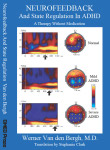
NEUROFEEDBACK AND STATE REGULATION IN ADHD

NEUROFEEDBACK AND STATE REGULATION IN ADHD: A THERAPY WITHOUT MEDICATION: Werner Van den Bergh, M.D., Translator: Stephanie Clark. The original Dutch manuscript receives an English translation and is updated with recent neurofeedback and ADHD research. Dr. Van den Bergh, a Belgium neuro-psychiatrist and neurologist who is a noted expert in the field of neurofeedback and ADHD and operates a private center dedicated to neurodevelopmental disorders, delivers a powerful overview of the current scientific evidence for Attention Deficit/Hyperactivity Disorder (ADHD) as a legitimate and distinct disorder, and brings together seemingly disparate research from diverse medical and psychological disciplines with a strong emphasis on EEG, sleep, and neurofeedback studies.
Dr. Van den Bergh further argues that neurofeedback (also known as “EEG-biofeedback”) should be strongly considered as a front-line treatment of ADHD. In short, this book provides an advanced look at ADHD and its treatment through neurofeedback that is essential reading for psychologists, neurotherapists, psychiatrists, physicians, neurologists, and anyone interested to learn more about this complex disorder and its treatment.”
NEUROFEEDBACK AND STATE REGULATION IN ADHD
$ 59.99

Wednesday, 12 February 2020

GETTING RID OF RITALIN

GETTING RID OF RITALIN: How Neurofeedback can successfully Treat Attention Deficit Disorder Without Drugs: Robert W. Hill – Four million children take Ritalin to control their attention deficit disorder (ADD), or hyperactivity. While Ritalin is reducing ADD symptoms in some cases, it is not always effective, often has undesirable side effects and does nothing to treat the underlying cause of ADD. Psychiatrist Eduardo Castro and psychologist Robert Hill say it’s time to replace Ritalin with neurofeedbackan innovative, scientifically proven form of brainwave biofeedback that teaches patients how to control their own brain. The authors have used this modality to successfully treat hundreds of children and adults with ADD and found it effective for 75-80% of clients.

GETTING RID OF RITALIN
$ 19.95

For More information click here : Biofeedback Training Houston

Thursday, 4 July 2019

Neurofeedback and Lyme’s Disease, Neurofeedback Training

A Clinical Application of the Five Phase Model of CNS Functional Transformation and Integration

Neurofeedback has generated enormous interest recently, especially in regards to ameliorating the effects of immune system involved disorders like Lyme’s Disease. Although Neurofeedback itself does not mitigate the disease processes that are responsible for immune system involved disorders, it can be quite helpful at restoring functional levels in affected individuals. In particular, sleep disturbance, mood disturbance, and increased fatigue, as well as poor concentration and diminished attentional abilities, all show remarkable restoration with effective neurofeedback. However, neurofeedback with immune system disorders is an even more recent development than neurofeedback with other more “traditional” disorders such as attention deficit disorder, post traumatic stress disorder and substance abuse.

One of the major difficulties in the rapidly emerging field of neurofeedback is the wealth of unintegrated clinical and research findings. This plethora of intriguing data currently lacks a systematic approach that will allow neurofeedback clinicians to apply the incredible power of this technology with precision across a range of diverse http://disorders.At present, intriguing bits of clinical wisdom float about chaotically, while practitioners have little sense of how to integrate these various nuggets into a comprehensive approach to restoring and optimizing CNS function. Having been engaged in the provision of neurofeedback across a wide variety of disorders, it became apparent to me that a comprehensive framework is necessary so that we can treat the person who has the disorder, and not chase the tail of the disorder that has the person. Fortunately, with a rigorous enough examination of the clinical wisdom that abounds in the literature currently, such a comprehensive and integrated framework suggests itself naturally. The present article will discuss this central idea as well as several main conclusions that flow from it, including the following.
  • A single,overarching Five Phase Model of CNS Functional Transformation exists which can integrate the various current neurofeedback protocols into a singular and comprehensive approach. This comprehensive framework can be used regardless of the particular disorder being treated. All clients begin with the same protocol and progress through each phase at their own pace, as determined by changes is functional status, as well as in more quantifiable shifts in E.E.G., especially as seen in spectral analysis.
  • A single, referential sensor placement at Cz is used for the majority of treatments, except for the last phase in which a four channel, global synchrony setup is necessary. This simple approach demonstrates equal or better clinical efficacy when compared to more diverse and varied hook ups.
  • The older terms of Alpha, Theta and Beta are no longer precise enough to guide clinical work and need to be replaced with more specific frequency based descriptors.
  • The functional limitations associated with immune systems involved disorders like Lyme’s Disease, CFIDS, and PMS respond well to the Five Phase Model of CNS Functional Transformation

Read Complete Article, Click here...

Monday, 29 April 2019

Is There a Neurofeedback Tsunami? (It is Synchrony.)

I think so and its name is Synchrony. Synchrony training is of great interest to many Neurofeedback practitioners. However, there seems to be a number of opinions about what synchrony means. We hope to add to the confusion by explaining our views. We will also explain why we feel synchrony training is an important part of Neurofeedback’s present and an even more important part of its future.
As multiple channel Neurofeedback systems come into fashion synchrony strategies will become critically important to this field. Stroebel, Fehmi, Green and others came to the view that there was a special relationship between EEG Synchrony and quality of some mind states in the early 70’s.
This insight came as a result of measuring the synchrony present as unusually gifted individuals demonstrated relatively high orders of perception and self-regulation.Not many are aware that the Nobel Laureate Francis Crick, coming from the traditional neuroscience “Binding” theory of consciousness, is reported to have speculated that EEG Synchrony may be an accessible and practically usable signature of consciousness. To quote from his book Astonishing Hypothesis, ” Both German groups suggested that these 40hz oscillations might be the Brain’s answer to the binding problem. They proposed that the neurons symbolizing all the different attributes of a single object (shape, color, movement, etc.) would bind these attributes to each other by firing together in synchrony.”

Now, Crick is limiting his investigation to visual awareness or “consciousness”. His notion is that synchronous firing is a way different types of neurons bind their different perceptions producing the phenomenon of consciousness. Others are signing on to this speculation. I doubt they are aware of the work that inspired the same kind of insight by early biofeedback researchers.

Our considerable experience with synchrony training has convinced us that it has substantial applications with problem patients including Alpha P and Minus types. However, we believe that synchrony will play an even greater role in Performance / Life Enhancement training. The value of right / left hemispheric synchrony training is widely recognized but less is known about rear /frontal. It is a reasonable hypothesis that rear / frontal is at least as important and relates to perception of the principle, the idea, the vision, if you will, and then the bringing of that vision into the real world, via the frontal lobes.

Read the complete blog here...

Read more related blogs:
  1. Neurofeedback Equipment for Mental Health
  2. Neurofeedback Training,New York

Harry
Bio-FeedBack Resources International Corp.

Sunday, 24 March 2019

Neurofeedback Training,New York

Neurofeedback training is available from many providers in some parts of New York but still is not widely available in other parts of the state. Manhattan has several providers. There are some in Westchester County and others in Long Island and Queens. They are much more rare in other areas like Upstate New York.

Some resources for finding providers include the Northeast Regional Biofeedback Society (nrbs.org), The Association for Applied Psychophysiology & Biofeedback (aapb.org) and the Biofeedback Certification International Alliance (bcia.org) Each website has a listing of providers that you can search by region. These can be an excellent resource for people looking for providers of neurofeedback training in New York as well as for professionals considering becoming a provider. They can see where there is more competition and where there is more need and opportunity.

Neurofeedback training can be provided by licensed medical and mental healthcare providers who have the proper additional education and experience. The best evidence for qualification is certification by BCIA (Biofeedback Certification International Alliance) which establishes requirements including education, experience, mentoring, and examination.  In addition to prerequisite education applicants also need to complete a 36 hour course in neurofeedback that trains them in all of the necessary basic information they should know to provide neurofeedback. They also need to evidence that they have completed a course in neuroanatomy.

The experience portion requires the applicant to complete 100 sessions of neurofeedback on clients and 10 on themselves plus review of the experience work with an experienced mentor. This process gives the applicant a much better chance of being successful at providing neurofeedback training to their clients.

Visit Our Website: neurofeedback training New York

More Blog: neurofeedback training

https://biofeedbackinternational.com/neurofeedback-trainingnew-york/ 

Wednesday, 12 December 2018

Professional Peripheral Biofeedback BCIA Program

Training Dates and Locations

Continuing Education Credit Available

Health Training Seminars, a division of Biofeedback Resources International is approved by the American Psychological Association to sponsor continuing education for psychologists. Health Training Seminars maintains responsibility for this program and its content.

BCIA Certification Requirements

A good link for Travel Arrangements

Professional Peripheral Biofeedback BCIA Program


JAN 17-19, 2019 – Miami, FL
May 3-5, 2019 – Hawthorne, NY
June 22-24, 2019 – Houston, TX
July 19-21, 2019 – Hawthorne, NY

Price: $1195

Our new style of seminar is designed to teach clinicians biofeedback fundamentals and cutting-edge applications. For better use of your time, the seminar will be a combination of 3-day classroom, home study and web-based training.

BRI Seminars Registration Form

Send payments to:

Biofeedback Resources International

109 Croton Ave, 2nd Fl, Suite 240

Ossining, NY 10562-5102

FAX: 914-762-2281

Please fill out the following and return. Print all information
Name as you would like it for the certification with any initials or credentials

Registration Form Click Here

Professional Peripheral Biofeedback BCIA Program

This innovative seminar is designed to teach clinicians biofeedback fundamentals and cutting-edge applications. This program covers all 48 hours of the BCIA Didactic Biofeedback Education requirement through powerful demonstrations of biofeedback and adjunctive procedures, imaginative hands-on lab exercises with multi-channel computerized equipment, professional multimedia presentations and comprehensive review materials. This program integrates personal hands-on training with equipment with didactic presentation.

Participants will learn:
    • The foundations of biofeedback

    • Physiological basis and recording of surface electromyography (sEMG), temperature, electrodermal activity (EDA), respiration patterns (strain gauges and pCO2), electroencephalography (EEG), peripheral blood flow (BVP), heart rate and respiratory sinus arrhythmia (RSA) and economic biofeedback approaches (including incentive inspirometers and scales)

    • How to identifying artifacts and determining appropriate recording

    • How to record and interpret data

    • How to perform a psychophysiological profile and pre and post data comparison

    • The use of adjunctive techniques such as progressive relaxation t raining, autogenic training, imagery, guided breathing, desensitization, mindfulness training, quieting reflex.

    • The role of home biofeedback devices such as Freeze framer, Wild Divine and GSR2

    • Overview of clinical and educational applications

 Event Info: Biofeedback Equipment

Sunday, 11 February 2018

Behavioral Health Trends in Medicine

Let’s face it, drugs are not the best answer to all medical conditions.  No matter what the symptom, there seems to be a medication to treat it. Whether it is indigestion, acid reflux, insomnia, anxiety, depression, hypertension, or headaches, there is a pill for it.  For the most part, these drugs only treat the symptoms temporarily.  They usually are not getting to the cause of the problem or stopping the symptoms permanently.


Behavioral health training is an area that takes into account a person’s behavior  and the role it plays in their health and overall well-being.  What are some of the things that a person does that can affect their health and well-being?  Here is a partial list: physical activity, eating, sleep, attitude or outlook on life.

Healthcare providers are beginning to acquire additional training so that they can help patients to become and stay more healthy.  Does your doctor follow the old drug model, asking what is the symptom and then quickly prescribing a medication?  If your doctor is incorporating behavioral health into their practice then they will be asking you about much more than your symptoms.  Some of the kinds of questions that you should expect to be asked are:  What kind of work do you do?  How much do you exercise?  What kinds of foods do you eat?  Do you smoke?  How much alcohol do you drink?  Do you use any drugs?  What is your social life like?  Are you married?  Do you have children?

These questions are not because the doctor just wants to get in your business.  All of these things can play a part in your health and well-being.   This is related to the idea that we are mind, body, and spirit and what affects one part affects the whole.  There are other elements outside of the person that can play a part in health and wellness that would also come under the heading of behavioral health like where you live and what the environment is.  Things like pollution, overcrowding, lack of proper nutritional food sources, and high crime which could make some kinds of exercise difficult can all have effects on a person’s health.

Some health care facilities are incorporating counseling and training in these areas so that patients realize the effects these factors can have and they work with them on what is in their power to make positive changes.  Some of these programs include patient education, meditation, biofeedback, exercise, yoga, nutritional counseling, and more.  Often when these kinds of things are addressed and lifestyle changes are made better results are gained than with medication or medication alone.
I no longer will even consider working with healthcare facilities or providers that don’t include working with me on the kinds of things that I can do or consider that could have an effect on my health in addition to advising me on medications that may help.

For More Info: Behavioral Health Seminars