Showing posts with label Biofeedback Equipment. Show all posts

Wednesday, 17 September 2025

Online Training For Biofeedback | BCIA Certification Biofeedback Seminar


Professional Peripheral Biofeedback BCIA Program

This innovative seminar is designed to teach clinicians biofeedback fundamentals and cutting-edge applications. This program covers all 42 hours of the BCIA Didactic Biofeedback Education requirement through powerful demonstrations of biofeedback and adjunctive procedures, imaginative hands-on lab exercises with multi-channel computerized equipment, professional multimedia presentations and comprehensive review materials. This program integrates personal hands-on training with equipment with didactic presentation.

Most of the people attending our training have a healthcare and or educational background. Many of the attendees are psychologists, social workers, mental health counselors, chiropractors and similar provider, although admission to our training is open to anyone interested without prerequisites.

For information or continuing education purposes we strongly encourage potential students to become BCIA certified. We advise them to review the current requirements for certification posted on the bcia.org website so that they know what else they will need in in addition to attending the course in order to qualify for certification if their goal is to work with patient/clients.

Read more...

If you’re seeking to improve your health and achieve optimal well-being, consider visiting us: Biofeedback Resources International

Thursday, 7 August 2025

Professional EEG Neurofeedback Certification | Neurofeedback Certification


 Professional EEG Neurofeedback Certification Program

EEG Neurofeedback is a rapidly growing field at the intersection of neuroscience, psychology, and technology. It empowers individuals to regulate their brain activity, offering a promising path for improving mental health and cognitive functioning. The Professional EEG Neurofeedback Certification Program is designed to equip individuals with the knowledge and skills to excel in this innovative field.

The Professional EEG Neurofeedback Certification Program offers a profound opportunity to become an expert in a cutting-edge field that has the potential to transform the way we approach mental health and cognitive enhancement. Certification ensures that practitioners uphold the highest standards of competence and ethics, making a positive impact on clients’ lives and advancing the field of EEG neurofeedback.

Participants will learn:

  • Orientation to EEG Biofeedback

  • Basic Neurophysiology and Neuroanatomy

  • Treatment Planning

  • Instrumentation & electronics

  • Research

  • Psychopharmacology Considerations

  • Professional Conduct

Read More...

If you’re seeking to improve your health and achieve optimal well-being, consider visiting us: Biofeedback Resources International

Tuesday, 29 July 2025

APA continuing training | EMG biofeedback for physical therapy


Unique Training Options for APA Continuing Education Credit section

Continuing education is a vital aspect of professional growth and development, especially for mental health practitioners, educators, and researchers. The American Psychological Association (APA) offers a range of accredited continuing education options to ensure that psychologists stay current with the latest advancements in their field. However, not all education opportunities are created equal. Let us share with you some unique training options for earning APA continuing education credits that go beyond traditional seminars and workshops.

Incorporating these unique training options into your CE strategy allows you to tailor your learning experience to your specific interests and professional goals, all while fulfilling your APA Continuing Education credit requirements.

Remember, the path to lifelong learning and professional development is a dynamic journey, and these unique training options offer exciting avenues to stay at the forefront of psychology.

Read More...

If you’re seeking to improve your health and achieve optimal well-being, consider visiting us: Biofeedback Resources International

Wednesday, 23 July 2025

Neurofeedback Training Online | Professional Neurofeedback Equipment


Neurofeedback, a form of biofeedback, in its current form, it is a cutting-edge technology that allows people to train their brains for improved mental performance and well-being. At the heart of neurofeedback lies sophisticated equipment designed to monitor and regulate brain activity. Here’s a closer look at how this innovative technology works.

Neurofeedback equipment usually consists of sensors, amplifiers, and a computer interface. The process begins with the placement of sensors on the scalp, which detect electrical signals produced by the brain. These signals, known as electroencephalography (EEG), represent the brain’s activity in real-time.

Once the sensors are in place, the EEG signals are transmitted to the amplifier, where they are amplified and filtered to separate various brainwave frequencies. These frequencies, categorized into different bands such as alpha, beta, theta, and delta, are associated with various mental states and functions like excitement, focus, and relaxation.

The filtered signals are then fed into the computer interface, where advanced software analyzes the data and provides feedback to the user in real-time. This feedback often takes the form of audio or visual cues, such as tones or images, which indicate the current state of brain activity.

During a neurofeedback session, individuals are guided to regulate their brainwave patterns consciously. For example, if the goal is to improve focus and attention, the trainee might be instructed to increase the amplitude of beta waves while decreasing theta waves. As the individual successfully modulates their brain activity according to the feedback, they receive positive reinforcement, reinforcing the desired patterns.

Read More...

If you’re seeking to improve your health and achieve optimal well-being, consider visiting us: Biofeedback Resources International

Wednesday, 16 July 2025

Biofeedback Therapy Certification | Professional Neurofeedback Equipment


Mental health professionals are on the front lines of psychological care, often absorbing the emotional weight of their clients’ struggles with anxiety, depression, trauma, and more. While the work is deeply rewarding, it is also inherently taxing. Burnout—characterized by emotional exhaustion, depersonalization, and a reduced sense of personal accomplishment—is a growing concern among therapists, counselors, and psychologists. One powerful, underutilized tool to help mitigate this challenge is biofeedback training.

Biofeedback is a mind-body technique that teaches individuals how to control physiological functions such as heart rate, muscle tension, skin temperature, and brain wave activity. Using biofeedback instruments, clinicians and clients can observe these bodily responses in real time, then apply strategies to regulate them.

When integrated into therapeutic practice, biofeedback offers a dynamic and interactive modality that can enhance treatment outcomes for common mental health issues such as anxiety and depression. Clients gain insight into how their bodies respond to stress and learn practical tools to promote relaxation and self-regulation. But importantly, biofeedback also offers a reprieve for therapists themselves.

Read More...

If you’re seeking to improve your health and achieve optimal well-being, consider visiting us: Biofeedback Resources International

Tuesday, 27 May 2025

Neurofeedback Certification Training | Neurofeedback Seminar


Neuronic: Pioneers in Photobiomodulation Technology for Brain Health

Neuronic is an innovative company, dedicated to developing home-use brain light therapy devices that utilize the latest in photobiomodulation technology to improve cognitive function and overall brain health.

At the forefront of this cutting-edge field, Neuronic is advancing both the fields of photobiomodulation and neurofeedback to help people dealing with cognitive issues. Since no two brains are alike, Neuronic also offers a consultation service designed to provide personalized support tailored to their customers’ needs based on Quantitative EEG (qEEG) results and personal history.

Resources for Brain Health Education & Awareness from Neuronic

Neuronic is also committed to promoting awareness and education about the benefits of brain light therapy. Their website provides a wealth of valuable resources, comprising scientifically-backed research, customer testimonials, and an insightful blog devoted to keeping consumers informed about the latest advancements in the field of brain health.

If you’re seeking to improve your brain health and achieve optimal well-being, consider turning to Neuronic. Buy Now!!!

Customers of Biofeedback International can also obtain $100 off their orders using the code BiofeedbackInternational100 on Neuronic’s website during checkout.

Wednesday, 21 May 2025

APA Continuing Education Credit | Biofeedback Therapy Training


May is Mental Health Awareness Month a time to prioritize emotional well-being and promote tools for resilience and self-regulation.

At Biofeedback Resources International Corporation, we’re committed to supporting mental health through evidence-based biofeedback equipment and training, empowering individuals and professionals to harness the power of mind-body connection for lasting change.

Since 1971, thousands of professionals and organizations have chosen our team for training, equipment and technical support.

HTS* instructors are among the most experienced and successful instructor / practitioners in biofeedback. Likewise, many of the professionals we have trained over the past thirty four years are today among the most successful biofeedback practitioners, nationally as well as internationally. Our FREE TRAINING and FREE ONLINE TRAINING programs are unmatched in biofeedback.

Health Training Seminars is approved by the American Psychological Association to offer continuing education for psychologists. Health Training Seminars maintains responsibility for the program.

In terms of quality, cost effectiveness, service and innovation, our unique team delivers unsurpassed value in biofeedback training and equipment.

Discover on our website the training, equipment, supplies, accessories, technical support and background information you need. New to biofeedback? Use our guided approach to getting started in the most time and cost efficient way possible. We urge you to PLAN YOUR TRAINING NOW.

For more information or continuing education purposes, visit: APA Continuing Education Credit

Tuesday, 8 April 2025

Exploring the Best Biofeedback and EEG Biofeedback Devices

Biofeedback and EEG biofeedback (neurofeedback) are powerful therapeutic tools used to help individuals regulate physiological processes, improve mental well-being, and manage stress. By providing real-time feedback on bodily functions like heart rate, muscle tension, and brainwave activity, these devices enable users to learn how to consciously control these processes. Over the years, advancements in technology have led to the development of cutting-edge devices that can be used in clinical settings or at home for self-regulation and wellness. In this article, we’ll explore some of the best biofeedback and EEG biofeedback devices available today, ideal for both professionals and those seeking personal improvement.

1. The ProComp Infiniti Biofeedback System is a comprehensive, professional-grade biofeedback device designed to provide precise, real-time monitoring of multiple physiological parameters, making it ideal for both clinical and research settings. Developed by Thought Technology, a leading manufacturer in the biofeedback industry, the ProComp Infiniti is a versatile system used by clinicians, therapists, and healthcare providers to treat a wide variety of mental and physical health conditions, including anxiety, stress, ADHD, chronic pain, and PTSD.

2. BrainMaster Discovery 24 Neurofeedback System
The BrainMaster Discovery 24 is an advanced EEG biofeedback device designed for professional use. This system is used by clinicians, therapists, and researchers to monitor and train brainwave activity in a more detailed and targeted manner. It comes with 24 channels for comprehensive brainwave monitoring and offers a range of features for customization and patient-specific protocols. BrainMaster’s system is ideal for treating complex neurological conditions, including PTSD, anxiety, ADHD, and sleep disorders.

3. EmWave2 by HeartMath
While primarily known for heart rate variability (HRV) training, EmWave2 by HeartMath integrates biofeedback principles to help individuals reduce stress, improve emotional regulation, and increase coherence between the heart and brain. The device is small and portable, making it convenient for use at home or on-the-go. EmWave2 uses HRV biofeedback to guide users through breathing exercises that promote a balanced and relaxed state, ultimately helping them achieve greater emotional and physical resilience.

Read more...

For more valuable insights, visit Biofeedback Training Psychology

Wednesday, 22 January 2025

ZUKOR DRIVE | APA Continuing Education Credit

Zukor’s Drive is an advanced feedback game which offers gameplay from very relaxed to extremely intense, or any point in between. It is designed for clinical neurofeedback or biofeedback training and, with an upgrade, for peak performance training.
 Zukor’s Drive standard “Clinical Version” offers a solo or dual drive modes, plus an unique doppelgänger option in which the patient competes against their own past performance. It includes 15 diverse vehicles and 5 high-quality tracks.

Zukor’s Drive “Peak Performance Upgrade” features additional more intense riving modes (chase, race and others), more chaotic tracks and more extreme vehicles. It can also be used to add variety to Clinical Version.

Zukor’s Drive also includes all the standard features of Zukor feedback games, such as profiles, scores, auditory feedback, period/session length presets and more. It is Zukor Interactive’s most ambitious feedback game and is certain to focus your clinical patients and engage those undergoing peak performance training.

More Info Click Here :  ZUKOR DRIVE | APA Continuing Education Credit

Monday, 8 May 2023

How to Use Biofeedback Equipment


Biofeedback Equipment is a process that uses instruments that record physiological signals from a person’s body and then display the information so that a person can learn to change the signal that is being measured.  One therapeutic application of biofeedback is for helping people with stress-related disorders.  In this context sensors may be attached to a client and signals including muscle tension, breathing, and heart rate is measured and displayed on a computer screen.  The client with the help of coaching from a therapist learns to control these signals and bring them to a more relaxed level.

Signals that are recorded with biofeedback instruments include:

Surface EMG (Electromyograph) – measures electrical signals produced when muscles contract.  These signals are picked up by sensors that are placed on the skin and attached to an instrument.

Skin Temperature – Measured from the hands or feet giving an indication of peripheral blood flow.  Skin temperature tends to increase when a person is more relaxed due to dilation of the local blood vessels which causes more blood to flow to the fingers or toes increasing the temperature.  Skin temperature tends to decrease when a person is stressed due to constriction of the local blood vessels causing a reduction of the amount of blood in the fingers or toes.

Skin Conductance – Measured from the palm side of the hands or feet gives an indication of changes in the amount of sweat on the skin.  Increased sweat on the hands or feet is an indication of emotional reactivity or arousal.

Respiration – Breathing is recorded by using a belt sensor that is placed around the abdomen.  It senses how often and how deeply a person breathes based on how often and how much the belt is stretched.  Breathing tends to be faster and shallower when a person is anxious and deeper and slower when a person is more relaxed.

More Info :  Biofeedback Equipment

Tuesday, 28 March 2023

Neurofeedback Training and Brain Plasticity


The brain is truly an amazing organ that science is uncovering new information about every day.

Our brains are involved in virtually every function of our bodies both conscious and unconscious.  To move our arms, stand, dance, speak, or remember we actively use our brains.  Digestion, breathing, pulse rate, blood pressure, and blinking are things that we don’t even have to think about.  Our brains take care of regulating these functions.

  It used to be thought that after maturity no real change happened in the brain.  The thought was that we are stuck with whatever we have.  More recent science shows that the brain can change.  Things like chronic stress can cause negative physical changes in the brain.  Things like studying a musical instrument, a new language or other skill can cause positive changes in the brain.

Neurofeedback training Florida is a method of using technology to measure the electrical signals produced by the brain as neurons communicate, and feeding back that information in order to train the brain to make positive changes.  The electrical signals are measured via small sensors placed on the scalp.  These sensors connect to an instrument that connects to a computer.  The signals are processed and displayed in the form of line graphs, bar graphs, and digital displays.  The process uses goals that are set to either encourage increasing or decreasing the power of certain frequencies ie theta, alpha, beta.  When the goals are met feedback is given to alert the trainee that their brain is in the desired state.  The feedback can take the form of a light turning on or changing color, an animation, movie, or game playing, or a sound or music playing.  This feedback is reinforcing to the brain and encourages the brain to repeat what it just did to get the feedback.

Neurofeedback training is being used in addition to other therapies to help people with symptoms related to sleep, stress, attention, emotional issues, trauma, learning difficulties, and substance abuse.

It can also be used to help people who want to perform better by helping them to be more relaxed and focused.  This can help with performance in sports, music, academics, or business.

Get More Info : Biofeedback Training Houston

Thursday, 9 February 2023

Procomp2|Biofeedback resources international


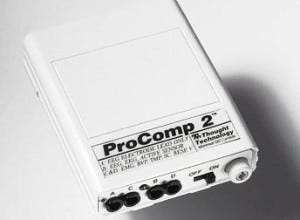
The ProComp2 is a compact yet powerful 2 channel biofeedback / neurofeedback system. You can monitor and record simultaneously using the BioGraph Infiniti software.

The ProComp 2 comes ready to measure a single channel of EEG with one built in EEG channel. This system can measure 2 channels of biofeedback or neurofeedback at one time. Add a second EEG for a state of the art two channel neurofeedback system.

The ProComp2™ is a compact yet powerful 2 channel device that allows clinicians to set up a second clinical system — or to empower their clients by offering them a take-home device that is convenient to wear on a headband or a shirt collar.

The ProComp2™ contains a built-in EEG sensor (simply connect an extender cable for EEG monitoring and biofeedback), and it can use any two of the ProComp Infiniti™ sensors. The ProComp2™ system contains all the peripherals to easily connect it to a desktop or laptop IBM-compatible PC.

Read More About: Health Biofeedback Equipment Florida.

Thursday, 17 November 2022

Biofeedback Applications in Education

Biofeedback is a process that uses technology to measure and feed back information about a person’s physiology so that they can learn how to gain increased control over it.  It is used clinically in healthcare settings by licensed mental or physical medicine professionals including psychologists, social workers, mental health counselors, physical therapists, chiropractors, nurses, occupational therapists, and rehab therapists.  It can also be used in educational settings.

Here is a list of biofeedback equipment modalities and what they measure:

Surface EMG (Electromyography) – Action potentials produced when muscles contract.

Skin Temperature – Temperature increases when blood vessels dilate with relaxation and decreases when blood vessels constrict in response to stress.

Skin Conductance – Increases when sweat increases on the hands in response to emotional reaction.

Heart Rate and Heart Rate Variability – Changes with changes in the autonomic nervous system.  It is related to vagal tone and can be affected by emotional state and breathing as well as physical activity

Respiration – Measures depth, mechanics, and rate of breathing.

Capnometer – Measures the amount of CO2 in the air that is exhaled through the nostrils into two tubes connected to an instrument.

EEG (Electroencephalograph) – Measures action potentials produced when neurons in the brain fire as part of their communication and function.

I will briefly discuss a few ways that biofeedback equipment can be used in K-12 schools as well as colleges and universities.

Science exploration – Educators can use biofeedback equipment to teach students about the various signals that can be measured from their bodies and the things that cause those signals to change.  Students of any age might be interested to learn about the measurable signals produced by their bodies like the energy given off by their muscles or brain, or the fact that their hand temperature or sweat activity can change in response to a thought.

Get More Info :  Biofeedback Applications in Education

Monday, 6 September 2021

BiofeedbackTraining New York

Where is biofeedback training available in New York?  That depends on what part of New York you are talking about and what kind of biofeedback training you are talking about.

New York is more than one place.  New York City is very different than Buffalo or Rochester.  Some parts of the state look more like the south than the city.

The other thing is, are you looking for training as a client or patient or as a student so that you can learn how to provide services?

If you are looking to be trained as a client because you have symptoms like headaches, anxiety, insomnia, or other symptoms that biofeedback is helpful for then you would be looking for a biofeedback provider.  The type of training is usually available from a psychologist, social worker, physical therapist, pain management specialist, or chiropractor.  You might be able to find them through a Google search.  You can also find a biofeedback provider in New York through the Northeast Regional Biofeedback Society.  This is an organization made up of biofeedback providers in the New York, New Jersey, Connecticut, Pennsylvania areas.  There is a listing of these providers on their website www.nrbs.orgWhen you get to the site, click on the Find a Practitioner button.  You can also do searches on the Association of Applied Psychophysiology & Biofeedback www.aapb.org or Biofeedback Certification International Alliancewww.bcia.org

If you are looking for biofeedback training so that you can learn to provide biofeedback to clients then it is best to find an organization that is accredited to provide biofeedback training that meets the requirements of the Biofeedback Certification Alliance.  It is possible to find a university offering biofeedback training, but it is more likely that you will find more non-university programs available.  A listing of programs that are accredited is available on the www.bcia.org website.  These programs cover all of the didactic information required for you to learn.  Some of them also include lab sessions where you are able to learn how to use the equipment by practicing with it.  Some programs are offered in-person in New York.  Others are offered online for those who cannot or prefer not to travel away from home to attend.

I hope that these suggestions will help you find the type of biofeedback training you are looking for.

Harry L. Campbell

914-762-4646 – Harry@biofeedbackinternational.com

Author of What Stress Can Do, Available on Amazon.com

Biofeedback Resources International Corp.

More Info :  BiofeedbackTraining New York

Saturday, 10 October 2020

Biofeedback Assisted Relaxation Therapy

 In Biofeedback when we talk about B.A.R.T we are not talking about that crazy kid on the popular cartoon series, The Simpsons, we are talking about a very popular protocol which can be widely applied for various conditions.  Rather than seeing it as a specific protocol I see it more as a concept.  When practitioners are learning biofeedback for the first time, they are usually very interested in learning very specific protocols for the conditions they expect to be working with like headaches, anxiety, insomnia, and depression.

They expect a specific guide as to which modalities, what goals, and the number of sessions to work on each modality for each application.  That would be nice.  It makes things simpler and makes it easier to plan.  It doesn’t always match reality for the individual that is in front of you.  Now, what is B.A.R.T.?  It is an acronym for Biofeedback Assisted Relaxation Therapy.  It’s kind of like a generalized protocol that helps to counter the stress response by using biofeedback to teach clients to regulate their physiology using multiple modalities including surface EMG, Skin temperature, Skin conductance, Heart Rate/Heart Rate Variability, Respiration, and EEG.   I decided to talk about this after reading Don Moss’s article, Biofeedback-Assisted Relaxation Training:  A Clinically Effective Treatment Protocol in the Summer 2020 issue of Biofeedback Magazine.

With the B.A.R.T. protocol you look at how a person’s physiology reacts to stress, i.e. increased muscle tension, respiration, skin conductance, heart rate, high beta, and decreased skin temperature, and alpha and teach them to reverse it using the appropriate biofeedback modalities to do it.  Clients are also instructed to practice appropriate relaxation exercises between sessions at home to initiate the relaxation response more often than when they are in the office for biofeedback sessions.  They are also instructed to keep records of their frequency and severity of symptoms and the conditions surrounding when they experience the symptoms as well and their practice.

When I talk to clients who are suffering from stress related disorders, I like to discuss the concept of levels of stress response that they may be walking around with.  The level is variable.  If the level is low then they have more capacity to deal with the stress that comes along to add to it.  If they already have a high level of stress then their capacity to deal with more is not as great.  For those who suffer with things like panic attacks those times when their stress level is already high are times when it is more likely for them to go into a panic attack.  During times when their stress level is lower it would be less likely for a stressor to push them into a panic attack.  They would still feel stressed but be more able to manage it.  I suggest that training with biofeedback and doing home relaxation practice can help bring their average stress level lower and thus increase their capacity to manage the stress that they will inevitably have to deal with in life.  Besides the biofeedback we do during office sessions I ask clients to practice relaxation exercises at home and I ask them to practice awareness of muscle tension by passively scanning their bodies for areas of tension and releasing any tension that they identify.  I also suggest that they take opportunities during everyday situations like standing in lines or waiting at red lights to practice slow breathing for short periods of time so that they are not always having to find 15-20 minutes for relaxation practice.  This also helps them to be turning on the relaxation response more often during the day.

When in doubt, if you don’t find the ideal protocol for biofeedback, the B.A.R.T. protocol is a good option.  It involves a thorough intake and history, tracking symptoms, doing a stress profile measuring multiple modalities under baseline, stressor, and recovery conditions as part of a complete initial assessment followed by training on the appropriate modalities plus homework of practicing relaxation exercises outside of the office.

Harry L. Campbell

914-762-4646 – Harry@biofeedbackinternational.com

Author of What Stress Can Do, Available on Amazon.com

Biofeedback Resources International Corp.

Get More Info : Click Here : Biofeedback Training Florida 

Thursday, 13 August 2020

Hypertension Biofeedback and Neurofeedback Protocols

According to the American Heart Association web site statistics, almost half of the adult population in the United States of America can be considered to have high blood pressure.  A hard to believe 45 percent of those who have hypertension do not have it adequately controlled.  That sounds pretty terrible to me.  Even with all of the medications that are prescribed such a low number of people have their blood pressure under control.  Many people are even prescribed 2 or 3 or even more blood pressure medications to attempt to bring the levels to an acceptable level.  This tells me that it is not a simple problem.  Medication alone may not be enough to normalize blood pressure.  Even when medication does normalize blood pressure it may not be the best long-term solution. There are many things that can elevate blood pressure that should be addressed in order to help normalize blood pressure.

Here is a link to a PDF file that lists and discusses things that could increase blood pressure, Blood Pressure Raisers, Learn what could raise your blood pressure:  https://www.heart.org/-/media/files/health-topics/high-blood-pressure/tylenol-hbp/bp-raisers.pdf?la=en

It mentions things like sodium, caffeine, alcohol, antidepressants, decongestants, amphetamines, and corticosteroids.


You could also add smoking, obesity, and a sedentary lifestyle to the list.

There are many applications that biofeedback and neurofeedback are used for.  Effectiveness varies for different conditions.  There is a document titled Evidenced Based Practice in Biofeedback and Neurofeedback, which is available from the Association of Applied Psychophysiology and Biofeedback, AAPB, aapb.org.  The latest edition is 2016.  There are 2004 and 2008 editions floating around on the internet in PDF format.  You can purchase the latest 2016 edition at aapb.org.  It rates biofeedback efficacy on a scale of 1—5, 1 being the least effective and 5 being the most effective.  Biofeedback for hypertension has a rating of 4 which is a very good rating, up there with tension and migraine headaches and ADHD read more...

Get More Info : Click Here Biofeedback Training Florida 

Wednesday, 13 May 2020

EMG BIOFEEDBACK BASIC APPLICATIONS WEBINAR

EMG is one of the most basic and useful modalities available. Why then aren’t more practitioners using it more often? EMG is one of the easiest ways to demonstrate the concept of biofeedback to clients. It responds very quickly and people can immediately see that they have at least some control over their muscle activity.
Objectives :
Participants will learn:
What is EMG Biofeedback?
What are common applications for EMG Biofeedback?
Common protocols overview
EMG Protocols to be covered are:
  • Headache
  • Neck Pain
  • Upper Back Pain
  • Low Back Pain
  • TMD
Common sensor placements
Screen selection and setup, instructions to clients and interpretation of data to indicate progress
 
Faculty:
Harry L. Campbell, BPS, BCB, BCN
Date and time
May 26, 2020
3:00pm–4:30pm EST
Fee: $35
Format: Gotomeeting
Session Length: 90 minutes
For more information or to register call 877-669-6463 or 914-762-4646 or visit biofeedbackinternational.com
Note all sessions will be recorded and a link will be sent so that you can download the session in case you are not able to attend live or if you want it for review later.

Wednesday, 12 February 2020

GETTING RID OF RITALIN

GETTING RID OF RITALIN: How Neurofeedback can successfully Treat Attention Deficit Disorder Without Drugs: Robert W. Hill – Four million children take Ritalin to control their attention deficit disorder (ADD), or hyperactivity. While Ritalin is reducing ADD symptoms in some cases, it is not always effective, often has undesirable side effects and does nothing to treat the underlying cause of ADD. Psychiatrist Eduardo Castro and psychologist Robert Hill say it’s time to replace Ritalin with neurofeedbackan innovative, scientifically proven form of brainwave biofeedback that teaches patients how to control their own brain. The authors have used this modality to successfully treat hundreds of children and adults with ADD and found it effective for 75-80% of clients.

GETTING RID OF RITALIN
$ 19.95

For More information click here : Biofeedback Training Houston

Wednesday, 12 December 2018

Professional Peripheral Biofeedback BCIA Program

Training Dates and Locations

Continuing Education Credit Available

Health Training Seminars, a division of Biofeedback Resources International is approved by the American Psychological Association to sponsor continuing education for psychologists. Health Training Seminars maintains responsibility for this program and its content.

BCIA Certification Requirements

A good link for Travel Arrangements

Professional Peripheral Biofeedback BCIA Program


JAN 17-19, 2019 – Miami, FL
May 3-5, 2019 – Hawthorne, NY
June 22-24, 2019 – Houston, TX
July 19-21, 2019 – Hawthorne, NY

Price: $1195

Our new style of seminar is designed to teach clinicians biofeedback fundamentals and cutting-edge applications. For better use of your time, the seminar will be a combination of 3-day classroom, home study and web-based training.

BRI Seminars Registration Form

Send payments to:

Biofeedback Resources International

109 Croton Ave, 2nd Fl, Suite 240

Ossining, NY 10562-5102

FAX: 914-762-2281

Please fill out the following and return. Print all information
Name as you would like it for the certification with any initials or credentials

Registration Form Click Here

Professional Peripheral Biofeedback BCIA Program

This innovative seminar is designed to teach clinicians biofeedback fundamentals and cutting-edge applications. This program covers all 48 hours of the BCIA Didactic Biofeedback Education requirement through powerful demonstrations of biofeedback and adjunctive procedures, imaginative hands-on lab exercises with multi-channel computerized equipment, professional multimedia presentations and comprehensive review materials. This program integrates personal hands-on training with equipment with didactic presentation.

Participants will learn:
    • The foundations of biofeedback

    • Physiological basis and recording of surface electromyography (sEMG), temperature, electrodermal activity (EDA), respiration patterns (strain gauges and pCO2), electroencephalography (EEG), peripheral blood flow (BVP), heart rate and respiratory sinus arrhythmia (RSA) and economic biofeedback approaches (including incentive inspirometers and scales)

    • How to identifying artifacts and determining appropriate recording

    • How to record and interpret data

    • How to perform a psychophysiological profile and pre and post data comparison

    • The use of adjunctive techniques such as progressive relaxation t raining, autogenic training, imagery, guided breathing, desensitization, mindfulness training, quieting reflex.

    • The role of home biofeedback devices such as Freeze framer, Wild Divine and GSR2

    • Overview of clinical and educational applications

 Event Info: Biofeedback Equipment