Showing posts with label EEG biofeedback. Show all posts

Tuesday, 25 August 2026

Professional EEG Neurofeedback Certification Program


Joe Kamiya Ph.D, discovered EEG Neurofeedback in 1959. This incredible learning technology developed gradually until about 1990. Since then, interest has surged providing opportunity for thousands of health care and educational professionals. Many of the practitioners we have trained have found EEG Neurofeedback to be so effective and widely applicable that it has become the most important strategy of their practice, adjunctive to almost all of the clinical and educational therapies they use.

Because EEG Neurofeedback influences the Central Nervous System and the CNS affects everything else, a growing number of world class scientists and practitioners are suggesting that the emergence of EEG Neurofeedback may be one of the most important developments in health care and education of our time. The extraordinary possibilities implied by the evolution of EEG Neurofeedback are generating escalating international enthusiasm and research.

This competency based curriculum includes practical, easily learnable strategies which may be used with virtually all of the most common EEG Neurofeedback applications. Designed to give the practitioner the knowledge and tools needed in order to rapidly achieve clinical and economic success in EEG Neurofeedback, this program emphasizes those neurofeedback adjunctive applications for which there is the greatest demand, including but not limited to: ADD / ADHD / Conduct Disorder & other Learning disabilities, Autism Disorders, Substance Abuse, eating disorders and addictive behaviors, PTSD, Multiple Personality Disorder, Depression, Behavioral and Stress Related Disorders, Anxiety / Panic Attacks, Pain Management, Chronic Pain, headaches (Migraine and Tension), RSD, Fibromyalgia, Phantom Limb etc., Adult and childhood sleep disorders, Traumatic Brain Injury, Stroke Rehabilitation, Dementia (non-Alzheimer’s), Epilepsy, Chronic Fatigue Syndrome and MindFitness® Life / Performance Enhancement.

Includes demonstrations and hands-on training on the most popular, versatile, cost effective, reliable and well supported EEG neurofeedback systems made as well as introductions to neurocardiology (Hear Rate Variability), Temperature, EMG and other complementary modalities, lively dialogues, case histories and the information you need in order to select the right equipment for your circumstances.

Thursday, 28 May 2026

NEURADIANT 1070 | Pioneers in Photobiomodulation Technology for Brain Health


Neuronic is an innovative company, dedicated to developing home-use brain light therapy devices that utilize the latest in photobiomodulation technology to improve cognitive function and overall brain health.

At the forefront of this cutting-edge field, Neuronic is advancing both the fields of photobiomodulation and neurofeedback to help people dealing with cognitive issues. Since no two brains are alike, Neuronic also offers a consultation service designed to provide personalized support tailored to their customers’ needs based on Quantitative EEG (qEEG) results and personal history.

The Neuradiant 1070: Advancing Cognitive Performance with Transcranial Photobiomodulation

Neuronic’s flagship product, the Neuradiant 1070, is a non-invasive transcranialp hotobiomodulation device that utilizes 1070nm near-infrared light to activate molecules that improve blood flow, reduce inflammation, and increase cellular energy. According to applied clinical research, this wavelength has been shown to increase cognitive performance.

WHAT WE OFFER

  • 4 Pre-set Programs:  Peace, Focus, Energize, Glow
  • Custom Settings: Allow you to change time, pulse rate and intensity
  • Free Online Video: Orientation to set-up the brain device

More Info : NEURADIANT 1070 

Tuesday, 26 May 2026

IBS CT-1600 Pulse Rate Monitor


The model CT-1600 utilizes an optical sensor to detect finger pulses and converts this measurement into direct reading digital pulse rate in beats per minute. The use of a sensitive optical sensor allows pulse measurements in cases when blood pressure is low and peripheral blood flow minute.

FEATURES

  • Digitally Programmable Alarms
    An audio alarm is activated when pulse rate falls outside the low or the high limits. The alarm thresholds can be adjusted externally with digital resolution over wide pulse rate ranges.

  • Battery Operation with Provisions for Fast Recharging
    The unit is compact with battery operation for safety and convenience. A low battery indicator warns of low battery condition. The unit will turn itself off when batteries become too low to provide accurate measurements.

  • Optional Plug-In Calibrator
    The accuracy of the instrument can be routinely confirmed by plugging in the pulse rate calibrator which is pre-set to provide constant 80 BPM pulse signals. If necessary, a simple screwdriver adjustment will return the accuracy of the instrument to factory specifications.

  • Visual Indicator and Audible Tone
    Pulse rate measurement is presented in large, bright LED digital displays. A red LED light flashes in synchronism with heart beats to display pulse regularity. In addition, a variable volume beep tone allows attendants to listen to the pulse rhythm.

Product Price : IBS CT-1600 $ 440.00

More Info :   IBS CT-1600 Pulse Rate Monitor

Wednesday, 16 April 2025

Understanding Neurofeedback: Equipment, Training, and Professional Development

Neurofeedback is a cutting-edge technique used to train the brain to function more effectively, offering promising therapeutic benefits for a variety of conditions, including anxiety, ADHD, insomnia, and PTSD. By utilizing real-time feedback, neurofeedback allows individuals to learn to regulate brainwave activity, leading to improved cognitive function, emotional regulation, and overall well-being. As neurofeedback continues to gain popularity, the demand for trained professionals and the appropriate neurofeedback equipment has grown significantly. This article explores the essentials of neurofeedback, including the equipment used, the training required for technicians, and opportunities for professional development such as APA Continuing Education credits.

What is Neurofeedback?

Neurofeedback, also referred to as EEG biofeedback, is a process that measures brainwave activity and provides feedback to the individual to help them regulate their brainwave patterns. Through this feedback loop, individuals can learn to increase or decrease the amplitude of certain brainwave frequencies to promote optimal brain function. This non-invasive approach has been shown to have positive outcomes for a wide range of mental health and neurological issues.

During a neurofeedback session, sensors are placed on the scalp to monitor brainwave activity. The collected data is then sent to a computer system where it is processed and displayed in real-time, often as a visual or auditory cue. For example, the patient might be shown a video game or animation, where the game responds to their brain activity by speeding up or slowing down depending on their brainwave regulation.

The Role of Neurofeedback Equipment

At the core of every neurofeedback session is the neurofeedback equipment, which typically consists of EEG sensors, amplifiers, and software. The EEG sensors are the key components, as they detect electrical activity from the brain and send this data to a computer system for processing.

The quality of neurofeedback equipment plays a critical role in the effectiveness of the treatment. Modern neurofeedback systems feature advanced sensors that ensure accurate readings of brainwave activity, alongside sophisticated software designed to present the feedback in a way that is engaging for the patient. For example, there are different types of neurofeedback equipment suited for various purposes, from basic brain training to more specialized therapeutic uses such as neurotherapy for traumatic brain injuries or mood disorders.

When selecting neurofeedback equipment, it’s essential for practitioners to consider factors such as the number of channels (which corresponds to the number of areas of the brain being monitored), the software’s interface, and the overall usability and reliability of the system.

Read More...

For more invaluable resources, visit Neurofeedback Certification Training

Wednesday, 2 April 2025

Biofeedback Training Psychology | Biofeedback Therapy Certification


There are still relatively few psychologists who are trained to provide neurofeedback services.

Here are four reasons some psychologists have decided to attend neurofeedback training.

1. Many clients or parents of clients are looking for alternative methods of dealing with ADHD besides medications.  Young people and adults that suffer with ADHD symptoms are usually proscribed medications that often but not always help.  Unwanted side effects often cause people to seek other ways of dealing with the symptoms.  Neurofeedback has been shown to be effective in helping reduce symptoms of ADHD.  When compared to a normative database, the abundance of slow waves – Theta or Alpha to the faster waves is often too high.  Neurofeedback training can help normalize this activity and help with reducing symptoms.

2. Psychologists see large numbers of clients with anxiety. Like with ADHD, clients with anxiety are often prescribed medications that might or might not be effective in managing symptoms and might also have negative side effects.  The brainwave activity of a person with anxiety is often different than those without anxiety.  In many cases the faster Beta waves show higher power than the average brain without the anxiety symptom.  Neurofeedback training has been shown to be effective in reducing anxiety symptoms by encouraging the brain to decrease the power in the faster Beta wave frequencies and increasing the slower Alpha wave frequencies that are associated with relaxation.

Read more here...

For more information, visit Biofeedback Resources International

Wednesday, 26 March 2025

Software: ZUKOR DRIVE PEAK PERFORMANCE


Zukor’s Drive is an advanced feedback game which offers gameplay from very relaxed to extremely intense, or any point in between. It is designed for clinical neurofeedback or biofeedback training and, with an upgrade, for peak performance training.

Zukor’s Drive standard “Clinical Version” offers a solo or dual drive modes, plus an unique doppelgänger option in which the patient competes against their own past performance. It includes 15 diverse vehicles and 5 high-quality tracks.

Zukor’s Drive “Peak Performance Upgrade” features additional more intense riving modes (chase, race and others), more chaotic tracks and more extreme vehicles. It can also be used to add variety to Clinical Version.

Zukor’s Drive also includes all the standard features of Zukor feedback games, such as profiles, scores, auditory feedback, period/session length presets and more. It is Zukor Interactive’s most ambitious feedback game and is certain to focus your clinical patients and engage those undergoing peak performance training.

Software: MINDFIT $395

More Info :  ZUKOR DRIVE PEAK PERFORMANCE

Tuesday, 4 March 2025

Human Physiology | Biofeedback Nyc

Biosource Software offers a $150 self-paced Human Physiology online didactic course that fulfills BCIA’s Anatomy and Physiology requirement for Biofeedback certification.

If you are pursuing Neurofeedback certification, you will need our Physiological Psychology course, instead.

Since your time is valuable, this course focuses on the topics important for biofeedback professionals.

Disclaimer: To keep these products affordable, they do not provide AMA or APA continuing education credit.

Based on the leading Human Physiology (15th ed.) textbook by Fox, this course covers:

Chapter 1: The Study of Body Function
Chapter 2: Chemical Composition of the Body
Chapter 3: Cell Structure and Genetic Control
Chapter 4: Enzymes and Energy
Chapter 5: Cell Respiration and Metabolism
Chapter 6: Interactions Between Cells and the Extracellular Environment
Chapter 7: The Nervous System
Chapter 8: The Central Nervous System
Chapter 9: The Autonomic Nervous System
Chapter 10: Sensory Physiology
Chapter 11: Endocrine Glands
Chapter 12: Muscle
Chapter 13: Blood, Heart and Circulation
Chapter 14: Cardiac Output, Blood Flow, and Blood Pressure
Chapter 15: The Immune System
Chapter 16: Respiratory Physiology
Chapter 17: Physiology of the Kidneys
Chapter 18: The Digestive System
Chapter 19: Regulation of Metabolism
Chapter 20: Reproduction

Related Products for BCIA Biofeedback Certification

Biofeedback Tutor is an online multimedia tutorial that provides an up-to-date and comprehensive review of biofeedback for BCIA certification preparation and professional education. Biofeedback Tutor satisfies 42 hours of didactic credit, including 3 hours of Professional Standards credit, for BCIA’s Biofeedback certification. $125.

Biofeedback100 is a multiple choice testing service that provides an up-to-date and extensive review of the Blueprint for the BCIA Certification Exam in Biofeedback. Biosource Software has developed a professionally-written question pool that exceeds 500 questions and is based on the current BCIA Blueprint of Knowledge and Core Reading List. $75.

More Info :  Biofeedback Nyc

Monday, 13 January 2025

T.O.V.A.-Additional tests, each | Biofeedback Nyc

Software: T.O.V.A.-Additional tests, each:

The T.O.V.A. objectively measures the key components of attention and self-control, variability (consistency), response time (speed), commissions (impulsivity), and omissions (focus and vigilance). The T.O.V.A. provides information that is not available through self-report or the report of others. It can be used along with subjective measures for a more comprehensive picture of academic, social, and personal performance. The T.O.V.A. does not make a diagnosis.

T.O.V.A.-Additional tests, each $15

Address:
109 Croton Ave, Ossining, NY 10562, USA
 

Phone no. +1 914-762-4646
 

More Info :  T.O.V.A.-Additional tests, each | Biofeedback Nyc

Monday, 20 May 2024

Behavioral Medicine Research & Training Foundation


Non-profit Scientific & Educational Organization 91-1948669
operating under Section 501c3 of the US Internal Revenue Code
6576 Blue Mountain Road, Port Angeles, WA 98362

Description of the distance based course:
Ethics for Biofeedback Providers
5 CEUs, Course Fee: $150.

Presented by Richard A. Sherman, PhD

Course Concept and Description: This 5 CE, distance based course is intended for clinicians, educators, and coaches who have incorporated or are interested in incorporating biofeedback (including neurofeedback) intervention and psychophysiological assessment techniques into their practices. It emphasizes issues in ethics and professional conduct which are of special interest to clinicians incorporating biofeedback – many of which are not clearly spelled out in typical codes of ethics and conduct promulgated by clinical organizations. Participants attend three audiovisual lectures (hear the instructor’s voice while watching slides), read text files, and interact with the instructor via e-mail. At the end of the course, participants answer a set of short essay questions covering key concepts in the course. No text is required for this course.

Most participants require about five hours to complete the course including answering the end of course questions and interacting with the instructor. Participants start the course whenever they wish to and proceed through the course at their convenience for up to one year. This course does not replace the standard 45 hour (3 credit) ethics courses usually required for licensure and does not cover all areas of ethics usually covered by such courses.

Five optional lectures are included in the course (introduction to biofeedback and for lectures on what you need to know to do biofeedback). Attending these lectures adds about an extra hour to the course.

Learning objectives: The course objective is to familiarize participants with the key ethical considerations and issues in professional conduct involved in providing biofeedback based interventions and clinical psychophysiological assessments which are frequently not covered adequately in traditional ethics courses. 

More Info : APA Continuing Education Credit


Tuesday, 17 October 2023

Unveiling the Potential of Neurofeedback Equipment: Your Gateway to Mind-Body Wellness

Neurofeedback, also known as EEG biofeedback or brainwave training, is a non-invasive technique that measures brainwave activity and provides real-time feedback. This feedback can be used to help individuals gain better control over their brain functions, such as reducing stress, improving focus, and managing symptoms of various mental health conditions.

How Does Neurofeedback Equipment Work?

  1. Electroencephalogram (EEG) Sensors: The core of neurofeedback equipment is EEG sensors. These sensors are placed on the scalp to monitor electrical activity in the brain. The collected data is then processed and displayed on a computer screen in the form of real-time brainwave patterns.

  2. Real-Time Feedback: As the user engages in various tasks or activities, the neurofeedback software translates brainwave data into visual or auditory feedback. This feedback allows the user to see and understand their brain's activity, making it easier to learn how to self-regulate and optimize their brain function.

Benefits of Neurofeedback Equipment

  1. Stress and Anxiety Reduction: Neurofeedback can help individuals reduce stress and anxiety by training the brain to shift to more relaxed states, promoting emotional balance and better self-regulation.

  2. Improved Focus and Attention: For those struggling with attention disorders or general focus issues, neurofeedback can enhance concentration and cognitive performance.

  3. Enhanced Sleep Quality: Neurofeedback can help regulate sleep patterns, making it easier for users to achieve restful and restorative sleep.

  4. Emotional Regulation: Individuals with mood disorders can benefit from neurofeedback by learning to self-regulate their emotional responses.

  5. Cognitive Enhancement: Neurofeedback has shown promise in improving memory, problem-solving abilities, and overall cognitive function.

  6. Pain Management: Some studies suggest that neurofeedback can help individuals better manage chronic pain by altering their perception of pain.


Who Can Benefit from Neurofeedback Equipment?

  • Individuals with anxiety, depression, or other mood disorders
  • Those with attention disorders like ADHD
  • Athletes looking to improve their mental focus and performance
  • Students aiming to enhance their learning and concentration
  • People struggling with sleep disorders
  • Anyone interested in optimizing their mental well-being
  • The Future of Neurofeedback

As technology continues to advance, so does the potential of neurofeedback equipment. Researchers are exploring new applications for neurofeedback, including its use in virtual reality environments, neurogaming, and as a tool for stress management in corporate settings.

Neurofeedback equipment represents a promising avenue for individuals seeking to optimize their mental and emotional well-being. By harnessing the power of real-time brainwave feedback, users can learn to self-regulate and enhance various aspects of their mental and emotional health. As this field continues to evolve, we can expect even more innovative applications for neurofeedback equipment in the future, providing new opportunities for self-improvement and overall well-being.

More info Click here : Neurofeedback Equipment

Thursday, 10 March 2022

The History of Muscle Dysfunction and SEMG


Jeffrey R. Cram, PhD and Maya Durie, MEd, CMT

Abstract

The history of muscle pain and dysfunction is viewed through the lens of a four factor theory of histologic (tissue related) issues, psychologic (emotional) issues, sensory motor (movement) issues and biomechanical (postural) issues. The historical antecedents of both bodywork and surface electromyography are reviewed.

Key words: Surface EMG, SEMG, bodywork, trigger points, posture, emotions, movement.

Note: Parts of this article have appeared in The History of SEMG, Jour App Psychophys and Biof, In Press.

Humans have had to deal with sore muscles since the beginning of time. Initially, muscle assessments and treatments were conducted by hand and during the last century, the use of electronic instruments came into play.

To put muscle function and the clinical use of Surface electromyography (SEMG) into a perspective of history, is seems prudent to utilize a broad nomothetic net or conceptual framework. In Clinical Applications for Surface Electromyography, Kasman, Cram and Wolf (1998) consider chronic muscle dysfunction from a four fold perspective: Histologic (Tissue related issues); Psychologic (Psychophysiology and Emotions), Sensorimotor (Movement) and Mechanical Dysfunction (Cumulative Trauma, Posture etc). In this article we will provide a brief historical overview related to each of these four areas. This will provide a deep background for the emergence of the clinical use of SEMG, including information on the history of body work, psychophysiology, rehabilitation and the emergence of electricity and SEMG instrumentation.

We will begin with issues pertaining to the tissues of the body. The muscle, as an organ system, contains many sensory mechanisms. The muscle spindles tell the nervous system about the instantaneous length and force of contraction of segments of muscle tissue. The golgi tendon organ measures the actual force which the muscle is exerting and the rufini nucleus of the joints informs the nervous system of the relationship of angles of the bones. However, it is the free nerve ending within the muscle that senses local pain. And it is metabolic disturbances such as too much (lactic) acid or too much internal pressure due to swelling, congestion or edema, which activate the free nerve ending.

From a clinical point of view, up until the last two centuries, palpation and observations about movement and posture were the only tools available for assessing muscle oriented pain. Through the manual sense of touch, the practitioner can learn to feel many things. Is the muscle tissue hard to the touch? Does it feel stiff? Does it have lumps, tough fibers, etc. or is it soft, supple and relaxed? What does the fascia feel like? Is there a normal cranial-sacral rhythm? As you move the body passively through its range of motion, does it seem restricted suggesting a shortened muscle resting length? During active movement, does it appear that the body is using the correct muscles for the movement or is there a substitution pattern? Is the patient afraid of movement due to pain? Has a trauma become lodged in the nervous system or even the muscle tissue itself? Can one see or feel problems with ligament laxities or joint fixations? These are just some of the examples of questions we want to address, both by hand and by instrument. . Thus, one could think of body work as a means to help normalize the disturbance of tissue that might foster and create muscle pain and SEMG as an instrumented way of assessing some of these conditions.

More Read Info :  The History of Muscle Dysfunction and SEMG


Monday, 22 April 2019

Theoretical Implications of Neurofeedback Integrating Bowen Theory

Simple statements often conceal a great deal of complexity. The notion that the brain learns from experience is one such statement. The brain develops the internal connections by fitting with the external world. Learning then can be defined as the struggle to make sense of human interactions. The efforts to integrate feeling and thinking, or values and impulses, are what gives each person their own unique self. Reflecting on much of life’s experience, furthers one’s goal and thereby enables humans to escape a deterministic world.
PET scans, MRI and EEG look at evidence that the brain does reflect the nature of relationship sensitivity, physical and emotional challenges and eons of evolution. For the EEG one arena, sleep states; have been very well documented. Eventually waking states of conscious will be as well investigated.
As in many areas of medicine much has been learned from symptoms. Diseases have taught us about the functioning of the different parts of the brain. Neither of the brain’s two information systems, chemical nor electrical has a one to one correspondence with functional states in the human. Rather the state of the body reflects the overall adaptation that any individual has made. Certain areas bind anxiety, and no one area can reflect a life history. An EEG may give us more insight into the overall way that feelings and thinking have been integrated and how we pay attention.

In 1929, Hans Berger measured the brain’s electrical activity. The activity was recorded in the form of line waves and now these same waves can be fed back to the brain as information. EEG Neurofeedback is a relatively new discipline that enables us to understand how the brain functions and also promotes the brain’s ability to learn from observing itself.

Neurofeedback has been documented to be useful for serious symptoms. People have been able to function after sever head trauma. Epileptics have been taught to reduce the severity and numbers of seizures. Headaches, and other types of physical pain, have been reduced. In addition to physical symptoms, emotional and physical symptoms, such as ADD, have been reported to decrease by Lubar, Tansy and others. There are a wide number of manufactures of equipment and most have reported positive results in working with various symptom groups.

Read the entire blog here...


Harry
Bio-FeedBack Resources International Corp.

Thursday, 11 April 2019

The Hidden Challenge in Alcohol and Drug Abuse

“Alcohol and drugs are essential to my creative process” is a thought, sometimes a confession made, usually privately, by millions of creative people, many of them at the pinnacle of success in their fields. Yet, I have heard very little serious discussion by substance abuse professionals about the profound implications of this phenomenon.

Some say that psychoactive drugs will be with us forever and maybe they will. However, my life improved immensely and was probably saved by my liberating myself from the pleasures, enthusiastic bursts of creativity and agonies of alcohol and smoke.

In fact, our society has declared a “war” on drugs and a sort of “police action” on alcohol. Humorous, isn’t it since far more damage is done in the aggregate by alcohol than by all other drugs combined?
As a society we believe that we must solve this catastrophic problem; or at least understand it enough so that we reduce the destructive pressure on our culture. Having come from a family of beautiful people who have been tragically impacted by alcohol and other drugs, I have had an intense interest in how and why this disaster happened to my dearest loves and beyond that to our civilization as a whole. What is the most effective way to heal the damage already done and reduce the problem in the future?

This led me into one of the most fascinating investigations of my life. I delved deeply into all of the conventional wisdom I could find… and I did most of my investigation while continuing to drink and smoke. I was what you call a highly functional substance abuser. In fact, my problem was never diagnosed by a professional or even a friend. I had to come to the realization that I had a substance abuse problem through self study.

Self study which involved a lot of EEG biofeedback and meditation.

Read the complete Blog here...


Harry
Bio-FeedBack Resources International Corp.

Wednesday, 5 December 2018

What is the Biofeedback Certification Institute of America?

The Biofeedback Certification Institute of America (BCIA) was created in January 1981 to establish and maintain standards for practitioners who use biofeedback, and certify those who meet these standards. BCIA is an autonomous nonprofit corporation. Its primary mission is to protect the public welfare by assuring the competence of certified biofeedback practitioners. BCIA policies and procedures are determined by an independent board which is comprised of a rotating group of distinguished biofeedback clinicians and researchers.

In 1996 the Board of Directors of the Biofeedback Certification Institute of America and the Academy of Certified Neurotherapists collaborated to develop a specialty certification in EEG Biofeedback to be managed and administered by BCIA. The opportunity to certify through the grand parenting process ended on December 31, 1997. As of 1998 the formal certification program in EEG Biofeedback is underway. In 2004 certification in Pelvic Muscle Dysfunction was added.

Monday, 26 November 2018

Mindfield® eTemp | APA continuing Credits

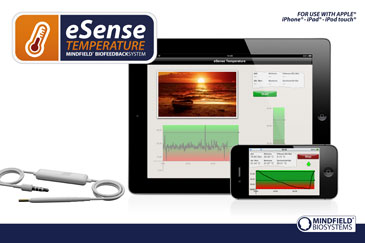
The eSense Temperature is a small sensor for measuring your skin temperature with the microphone input of your smartphone or tablet (Android or Apple iOS.)

A free app by Mindfield® is included to display your skin temperature in different ways for biofeedback training. You can export the measured values via e-mail.

Handwarming training is an especially effective and common biofeedback method. The temperature of our hands is connected to our stress level: When we are stressed, we tend to have cold hands.

 The eSense Temperature sensor is attached to your index or middle finger, or held between index finger and thumb. Immediate feedback enables you to voluntarily increase the skin temperature in your fingers, thus increasing your peripheral blood circulation, leading to relaxation and stress reduction.

This is an easy and effective training to improve your well-being!

Background information on Skin Temperature


The skin’s surface temperature changes according to blood circulation through body tissue. The small blood vessels (arterioles) crossing through the tissue are surrounded by fibers of smooth muscle controlled by the sympathetic nervous system.

In a state of increased exertion, excitement and stress, these muscle fibers contract and narrow the blood vessels. This leads to a reduction of skin temperature because blood circulation through the tissue is reduced. By contrast, in a resting or calm state, the muscles relax and the blood vessels expand. The skin temperature rises.

Official Website: APA continuing Credits

More Info Click Here : APA continuing training 

Wednesday, 31 October 2018

PROFESSIONAL EEG NEUROFEEDBACK CERTIFICATION PROGRAM

Training Dates and Locations

Continuing Education Credit Available
Health Training Seminars, a division of Biofeedback Resources International is approved by the American Psychological Association to sponsor continuing education for psychologists. Health Training Seminars maintains responsibility for this program and its content.

BCIA Certification Requirements
A good link for Travel Arrangements

Professional EEG Neurofeedback Certification Program

NOV 4-6, 2018 – Isla Verde, Puerto Ric
NOV 16-18, 2018 – Hawthorne, NY
JAN 21-23, 2019 – Miami, FL

Price: $995

This new style of seminar is designed to teach clinicians neurofeedback fundamentals and cutting-edge applications. For better use of your time, the seminar will be a combination of 3-day classroom, home study and web-based training.

Registration Form Download a printable registration form.


Joe Kamiya Ph.D, discovered EEG Neurofeedback in 1959. This incredible learning technology developed gradually until about 1990. Since then, interest has surged providing opportunity for thousands of health care and educational professionals. Many of the practitioners we have trained have found EEG Neurofeedback to be so effective and widely applicable that it has become the most important strategy of their practice, adjunctive to almost all of the clinical and educational therapies they use.

Because EEG Neurofeedback influences the Central Nervous System and the CNS affects everything else, a growing number of world class scientists and practitioners are suggesting that the emergence of EEG Neurofeedback may be one of the most important developments in health care and education of our time. The extraordinary possibilities implied by the evolution of EEG Neurofeedback are generating escalating international enthusiasm and research.

This competency based curriculum includes practical, easily learnable strategies which may be used with virtually all of the most common EEG Neurofeedback applications. Designed to give the practitioner the knowledge and tools needed in order to rapidly achieve clinical and economic success in EEG Neurofeedback, this program emphasizes those neurofeedback adjunctive applications for which there is the greatest demand, including but not limited to: ADD / ADHD / Conduct Disorder & other Learning disabilities, Autism Disorders, Substance Abuse, eating disorders and addictive behaviors, PTSD, Multiple Personality Disorder, Depression, Behavioral and Stress Related Disorders, Anxiety / Panic Attacks, Pain Management, Chronic Pain, headaches (Migraine and Tension), RSD, Fibromyalgia, Phantom Limb etc., Adult and childhood sleep disorders, Traumatic Brain Injury, Stroke Rehabilitation, Dementia (non-Alzheimer’s), Epilepsy, Chronic Fatigue Syndrome and MindFitness® Life / Performance Enhancement.

Official Website EEG biofeedback

More Info Click Here: EEG Neurofeedback Certification Program 

Friday, 26 October 2018

EEG biofeedback


EEG Biofeedback is a learning strategy that enables persons to regulate their brain waves. When hint about a person's own brain recognition characteristics is made together together along with to to him, he can learn to change them. You can think of it as exercise for the brain.

About biofeedbackinternational

Biofeedback Resources International ... Providing quality biofeedback instruments and professional training for over 25 years.

Mission: Foster self-knowledge and improve lives through innovation, continuous improvement of products, services, employee productivity and relentless efforts to deliver highest values at lowest prices.Welcome! Since 1971, thousands of professionals and organizations have chosen our team for training, equipment and technical support. Word of mouth from satisfied clients has made us an international, full service leaders.

More Info Click Here:   EEG biofeedback |