Showing posts with label Mind Body Seminars. Show all posts

Tuesday, 25 August 2026

Professional EEG Neurofeedback Certification Program


Joe Kamiya Ph.D, discovered EEG Neurofeedback in 1959. This incredible learning technology developed gradually until about 1990. Since then, interest has surged providing opportunity for thousands of health care and educational professionals. Many of the practitioners we have trained have found EEG Neurofeedback to be so effective and widely applicable that it has become the most important strategy of their practice, adjunctive to almost all of the clinical and educational therapies they use.

Because EEG Neurofeedback influences the Central Nervous System and the CNS affects everything else, a growing number of world class scientists and practitioners are suggesting that the emergence of EEG Neurofeedback may be one of the most important developments in health care and education of our time. The extraordinary possibilities implied by the evolution of EEG Neurofeedback are generating escalating international enthusiasm and research.

This competency based curriculum includes practical, easily learnable strategies which may be used with virtually all of the most common EEG Neurofeedback applications. Designed to give the practitioner the knowledge and tools needed in order to rapidly achieve clinical and economic success in EEG Neurofeedback, this program emphasizes those neurofeedback adjunctive applications for which there is the greatest demand, including but not limited to: ADD / ADHD / Conduct Disorder & other Learning disabilities, Autism Disorders, Substance Abuse, eating disorders and addictive behaviors, PTSD, Multiple Personality Disorder, Depression, Behavioral and Stress Related Disorders, Anxiety / Panic Attacks, Pain Management, Chronic Pain, headaches (Migraine and Tension), RSD, Fibromyalgia, Phantom Limb etc., Adult and childhood sleep disorders, Traumatic Brain Injury, Stroke Rehabilitation, Dementia (non-Alzheimer’s), Epilepsy, Chronic Fatigue Syndrome and MindFitness® Life / Performance Enhancement.

Includes demonstrations and hands-on training on the most popular, versatile, cost effective, reliable and well supported EEG neurofeedback systems made as well as introductions to neurocardiology (Hear Rate Variability), Temperature, EMG and other complementary modalities, lively dialogues, case histories and the information you need in order to select the right equipment for your circumstances.

Thursday, 28 May 2026

NEURADIANT 1070 | Pioneers in Photobiomodulation Technology for Brain Health


Neuronic is an innovative company, dedicated to developing home-use brain light therapy devices that utilize the latest in photobiomodulation technology to improve cognitive function and overall brain health.

At the forefront of this cutting-edge field, Neuronic is advancing both the fields of photobiomodulation and neurofeedback to help people dealing with cognitive issues. Since no two brains are alike, Neuronic also offers a consultation service designed to provide personalized support tailored to their customers’ needs based on Quantitative EEG (qEEG) results and personal history.

The Neuradiant 1070: Advancing Cognitive Performance with Transcranial Photobiomodulation

Neuronic’s flagship product, the Neuradiant 1070, is a non-invasive transcranialp hotobiomodulation device that utilizes 1070nm near-infrared light to activate molecules that improve blood flow, reduce inflammation, and increase cellular energy. According to applied clinical research, this wavelength has been shown to increase cognitive performance.

WHAT WE OFFER

  • 4 Pre-set Programs:  Peace, Focus, Energize, Glow
  • Custom Settings: Allow you to change time, pulse rate and intensity
  • Free Online Video: Orientation to set-up the brain device

More Info : NEURADIANT 1070 

Tuesday, 26 May 2026

IBS CT-1600 Pulse Rate Monitor


The model CT-1600 utilizes an optical sensor to detect finger pulses and converts this measurement into direct reading digital pulse rate in beats per minute. The use of a sensitive optical sensor allows pulse measurements in cases when blood pressure is low and peripheral blood flow minute.

FEATURES

  • Digitally Programmable Alarms
    An audio alarm is activated when pulse rate falls outside the low or the high limits. The alarm thresholds can be adjusted externally with digital resolution over wide pulse rate ranges.

  • Battery Operation with Provisions for Fast Recharging
    The unit is compact with battery operation for safety and convenience. A low battery indicator warns of low battery condition. The unit will turn itself off when batteries become too low to provide accurate measurements.

  • Optional Plug-In Calibrator
    The accuracy of the instrument can be routinely confirmed by plugging in the pulse rate calibrator which is pre-set to provide constant 80 BPM pulse signals. If necessary, a simple screwdriver adjustment will return the accuracy of the instrument to factory specifications.

  • Visual Indicator and Audible Tone
    Pulse rate measurement is presented in large, bright LED digital displays. A red LED light flashes in synchronism with heart beats to display pulse regularity. In addition, a variable volume beep tone allows attendants to listen to the pulse rhythm.

Product Price : IBS CT-1600 $ 440.00

More Info :   IBS CT-1600 Pulse Rate Monitor

Wednesday, 26 March 2025

Software: ZUKOR DRIVE PEAK PERFORMANCE


Zukor’s Drive is an advanced feedback game which offers gameplay from very relaxed to extremely intense, or any point in between. It is designed for clinical neurofeedback or biofeedback training and, with an upgrade, for peak performance training.

Zukor’s Drive standard “Clinical Version” offers a solo or dual drive modes, plus an unique doppelgänger option in which the patient competes against their own past performance. It includes 15 diverse vehicles and 5 high-quality tracks.

Zukor’s Drive “Peak Performance Upgrade” features additional more intense riving modes (chase, race and others), more chaotic tracks and more extreme vehicles. It can also be used to add variety to Clinical Version.

Zukor’s Drive also includes all the standard features of Zukor feedback games, such as profiles, scores, auditory feedback, period/session length presets and more. It is Zukor Interactive’s most ambitious feedback game and is certain to focus your clinical patients and engage those undergoing peak performance training.

Software: MINDFIT $395

More Info :  ZUKOR DRIVE PEAK PERFORMANCE

Tuesday, 4 March 2025

Human Physiology | Biofeedback Nyc

Biosource Software offers a $150 self-paced Human Physiology online didactic course that fulfills BCIA’s Anatomy and Physiology requirement for Biofeedback certification.

If you are pursuing Neurofeedback certification, you will need our Physiological Psychology course, instead.

Since your time is valuable, this course focuses on the topics important for biofeedback professionals.

Disclaimer: To keep these products affordable, they do not provide AMA or APA continuing education credit.

Based on the leading Human Physiology (15th ed.) textbook by Fox, this course covers:

Chapter 1: The Study of Body Function
Chapter 2: Chemical Composition of the Body
Chapter 3: Cell Structure and Genetic Control
Chapter 4: Enzymes and Energy
Chapter 5: Cell Respiration and Metabolism
Chapter 6: Interactions Between Cells and the Extracellular Environment
Chapter 7: The Nervous System
Chapter 8: The Central Nervous System
Chapter 9: The Autonomic Nervous System
Chapter 10: Sensory Physiology
Chapter 11: Endocrine Glands
Chapter 12: Muscle
Chapter 13: Blood, Heart and Circulation
Chapter 14: Cardiac Output, Blood Flow, and Blood Pressure
Chapter 15: The Immune System
Chapter 16: Respiratory Physiology
Chapter 17: Physiology of the Kidneys
Chapter 18: The Digestive System
Chapter 19: Regulation of Metabolism
Chapter 20: Reproduction

Related Products for BCIA Biofeedback Certification

Biofeedback Tutor is an online multimedia tutorial that provides an up-to-date and comprehensive review of biofeedback for BCIA certification preparation and professional education. Biofeedback Tutor satisfies 42 hours of didactic credit, including 3 hours of Professional Standards credit, for BCIA’s Biofeedback certification. $125.

Biofeedback100 is a multiple choice testing service that provides an up-to-date and extensive review of the Blueprint for the BCIA Certification Exam in Biofeedback. Biosource Software has developed a professionally-written question pool that exceeds 500 questions and is based on the current BCIA Blueprint of Knowledge and Core Reading List. $75.

More Info :  Biofeedback Nyc

Monday, 13 January 2025

T.O.V.A.-Additional tests, each | Biofeedback Nyc

Software: T.O.V.A.-Additional tests, each:

The T.O.V.A. objectively measures the key components of attention and self-control, variability (consistency), response time (speed), commissions (impulsivity), and omissions (focus and vigilance). The T.O.V.A. provides information that is not available through self-report or the report of others. It can be used along with subjective measures for a more comprehensive picture of academic, social, and personal performance. The T.O.V.A. does not make a diagnosis.

T.O.V.A.-Additional tests, each $15

Address:
109 Croton Ave, Ossining, NY 10562, USA
 

Phone no. +1 914-762-4646
 

More Info :  T.O.V.A.-Additional tests, each | Biofeedback Nyc

Monday, 20 May 2024

Behavioral Medicine Research & Training Foundation


Non-profit Scientific & Educational Organization 91-1948669
operating under Section 501c3 of the US Internal Revenue Code
6576 Blue Mountain Road, Port Angeles, WA 98362

Description of the distance based course:
Ethics for Biofeedback Providers
5 CEUs, Course Fee: $150.

Presented by Richard A. Sherman, PhD

Course Concept and Description: This 5 CE, distance based course is intended for clinicians, educators, and coaches who have incorporated or are interested in incorporating biofeedback (including neurofeedback) intervention and psychophysiological assessment techniques into their practices. It emphasizes issues in ethics and professional conduct which are of special interest to clinicians incorporating biofeedback – many of which are not clearly spelled out in typical codes of ethics and conduct promulgated by clinical organizations. Participants attend three audiovisual lectures (hear the instructor’s voice while watching slides), read text files, and interact with the instructor via e-mail. At the end of the course, participants answer a set of short essay questions covering key concepts in the course. No text is required for this course.

Most participants require about five hours to complete the course including answering the end of course questions and interacting with the instructor. Participants start the course whenever they wish to and proceed through the course at their convenience for up to one year. This course does not replace the standard 45 hour (3 credit) ethics courses usually required for licensure and does not cover all areas of ethics usually covered by such courses.

Five optional lectures are included in the course (introduction to biofeedback and for lectures on what you need to know to do biofeedback). Attending these lectures adds about an extra hour to the course.

Learning objectives: The course objective is to familiarize participants with the key ethical considerations and issues in professional conduct involved in providing biofeedback based interventions and clinical psychophysiological assessments which are frequently not covered adequately in traditional ethics courses. 

More Info : APA Continuing Education Credit


Tuesday, 17 October 2023

Unveiling the Potential of Neurofeedback Equipment: Your Gateway to Mind-Body Wellness

Neurofeedback, also known as EEG biofeedback or brainwave training, is a non-invasive technique that measures brainwave activity and provides real-time feedback. This feedback can be used to help individuals gain better control over their brain functions, such as reducing stress, improving focus, and managing symptoms of various mental health conditions.

How Does Neurofeedback Equipment Work?

  1. Electroencephalogram (EEG) Sensors: The core of neurofeedback equipment is EEG sensors. These sensors are placed on the scalp to monitor electrical activity in the brain. The collected data is then processed and displayed on a computer screen in the form of real-time brainwave patterns.

  2. Real-Time Feedback: As the user engages in various tasks or activities, the neurofeedback software translates brainwave data into visual or auditory feedback. This feedback allows the user to see and understand their brain's activity, making it easier to learn how to self-regulate and optimize their brain function.

Benefits of Neurofeedback Equipment

  1. Stress and Anxiety Reduction: Neurofeedback can help individuals reduce stress and anxiety by training the brain to shift to more relaxed states, promoting emotional balance and better self-regulation.

  2. Improved Focus and Attention: For those struggling with attention disorders or general focus issues, neurofeedback can enhance concentration and cognitive performance.

  3. Enhanced Sleep Quality: Neurofeedback can help regulate sleep patterns, making it easier for users to achieve restful and restorative sleep.

  4. Emotional Regulation: Individuals with mood disorders can benefit from neurofeedback by learning to self-regulate their emotional responses.

  5. Cognitive Enhancement: Neurofeedback has shown promise in improving memory, problem-solving abilities, and overall cognitive function.

  6. Pain Management: Some studies suggest that neurofeedback can help individuals better manage chronic pain by altering their perception of pain.


Who Can Benefit from Neurofeedback Equipment?

  • Individuals with anxiety, depression, or other mood disorders
  • Those with attention disorders like ADHD
  • Athletes looking to improve their mental focus and performance
  • Students aiming to enhance their learning and concentration
  • People struggling with sleep disorders
  • Anyone interested in optimizing their mental well-being
  • The Future of Neurofeedback

As technology continues to advance, so does the potential of neurofeedback equipment. Researchers are exploring new applications for neurofeedback, including its use in virtual reality environments, neurogaming, and as a tool for stress management in corporate settings.

Neurofeedback equipment represents a promising avenue for individuals seeking to optimize their mental and emotional well-being. By harnessing the power of real-time brainwave feedback, users can learn to self-regulate and enhance various aspects of their mental and emotional health. As this field continues to evolve, we can expect even more innovative applications for neurofeedback equipment in the future, providing new opportunities for self-improvement and overall well-being.

More info Click here : Neurofeedback Equipment

Thursday, 10 March 2022

The History of Muscle Dysfunction and SEMG


Jeffrey R. Cram, PhD and Maya Durie, MEd, CMT

Abstract

The history of muscle pain and dysfunction is viewed through the lens of a four factor theory of histologic (tissue related) issues, psychologic (emotional) issues, sensory motor (movement) issues and biomechanical (postural) issues. The historical antecedents of both bodywork and surface electromyography are reviewed.

Key words: Surface EMG, SEMG, bodywork, trigger points, posture, emotions, movement.

Note: Parts of this article have appeared in The History of SEMG, Jour App Psychophys and Biof, In Press.

Humans have had to deal with sore muscles since the beginning of time. Initially, muscle assessments and treatments were conducted by hand and during the last century, the use of electronic instruments came into play.

To put muscle function and the clinical use of Surface electromyography (SEMG) into a perspective of history, is seems prudent to utilize a broad nomothetic net or conceptual framework. In Clinical Applications for Surface Electromyography, Kasman, Cram and Wolf (1998) consider chronic muscle dysfunction from a four fold perspective: Histologic (Tissue related issues); Psychologic (Psychophysiology and Emotions), Sensorimotor (Movement) and Mechanical Dysfunction (Cumulative Trauma, Posture etc). In this article we will provide a brief historical overview related to each of these four areas. This will provide a deep background for the emergence of the clinical use of SEMG, including information on the history of body work, psychophysiology, rehabilitation and the emergence of electricity and SEMG instrumentation.

We will begin with issues pertaining to the tissues of the body. The muscle, as an organ system, contains many sensory mechanisms. The muscle spindles tell the nervous system about the instantaneous length and force of contraction of segments of muscle tissue. The golgi tendon organ measures the actual force which the muscle is exerting and the rufini nucleus of the joints informs the nervous system of the relationship of angles of the bones. However, it is the free nerve ending within the muscle that senses local pain. And it is metabolic disturbances such as too much (lactic) acid or too much internal pressure due to swelling, congestion or edema, which activate the free nerve ending.

From a clinical point of view, up until the last two centuries, palpation and observations about movement and posture were the only tools available for assessing muscle oriented pain. Through the manual sense of touch, the practitioner can learn to feel many things. Is the muscle tissue hard to the touch? Does it feel stiff? Does it have lumps, tough fibers, etc. or is it soft, supple and relaxed? What does the fascia feel like? Is there a normal cranial-sacral rhythm? As you move the body passively through its range of motion, does it seem restricted suggesting a shortened muscle resting length? During active movement, does it appear that the body is using the correct muscles for the movement or is there a substitution pattern? Is the patient afraid of movement due to pain? Has a trauma become lodged in the nervous system or even the muscle tissue itself? Can one see or feel problems with ligament laxities or joint fixations? These are just some of the examples of questions we want to address, both by hand and by instrument. . Thus, one could think of body work as a means to help normalize the disturbance of tissue that might foster and create muscle pain and SEMG as an instrumented way of assessing some of these conditions.

More Read Info :  The History of Muscle Dysfunction and SEMG


Tuesday, 5 February 2019

Neurofeedback Equipment for Professional and Home Use

Devices for measuring and giving feedback of EEG brainwave activity is not new. Some have been available commercially since the 1970s. The first one that I was introduced to was housed in a wooden box and had an analog meter, a training frequency selector for Alpha, Theta, or Beta, a threshold setting, and audio feedback -very simple. It did not interface with a computer and there was no data storage or report available. This was around 1985. Since then much has changed. Those devices began to be interfaced with computers for better feedback and the added capabilities of data storage and reports.

Other systems have come along that only work with a computer with no feedback on the device that you plug the sensor cables into. Now there are some that work with smart phones and tablets like one called The Muse.

Though the early systems recorded from only one site on the head at a time, now many of the professional systems record 19 or more sites simultaneously like the Brainmaster Discovery.
Professional neurofeedback equipment is classified by the FDA as a class 2 medical device and can only be purchased by a licensed healthcare professional or on the order of one for a patient to use at home under supervision. Other neurofeedback equipment is designed for use by non-professionals and are not intended to treat any medical or mental health conditions. They are only to be used for relaxation and education purposes.

Professional neurofeedback equipment is made by reputable companies that have registered with the FDA (Food and Drug Administration) so that they can legally sell the equipment. As a licensed healthcare professional you would not want to use equipment with your clients that is not legal.

Visit Our Website: Neurofeedback Equipment

Read More Blog: Mind Body Seminars

https://biofeedbackinternational.com/neurofeedback-equipment-for-professional-and-home-use/ 

Monday, 26 November 2018

Mindfield® eTemp | APA continuing Credits

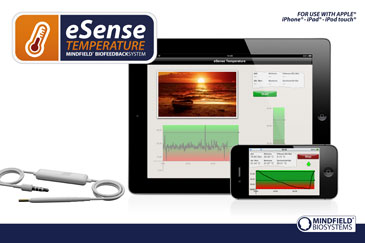
The eSense Temperature is a small sensor for measuring your skin temperature with the microphone input of your smartphone or tablet (Android or Apple iOS.)

A free app by Mindfield® is included to display your skin temperature in different ways for biofeedback training. You can export the measured values via e-mail.

Handwarming training is an especially effective and common biofeedback method. The temperature of our hands is connected to our stress level: When we are stressed, we tend to have cold hands.

 The eSense Temperature sensor is attached to your index or middle finger, or held between index finger and thumb. Immediate feedback enables you to voluntarily increase the skin temperature in your fingers, thus increasing your peripheral blood circulation, leading to relaxation and stress reduction.

This is an easy and effective training to improve your well-being!

Background information on Skin Temperature


The skin’s surface temperature changes according to blood circulation through body tissue. The small blood vessels (arterioles) crossing through the tissue are surrounded by fibers of smooth muscle controlled by the sympathetic nervous system.

In a state of increased exertion, excitement and stress, these muscle fibers contract and narrow the blood vessels. This leads to a reduction of skin temperature because blood circulation through the tissue is reduced. By contrast, in a resting or calm state, the muscles relax and the blood vessels expand. The skin temperature rises.

Official Website: APA continuing Credits

More Info Click Here : APA continuing training 

Friday, 26 October 2018

EEG biofeedback


EEG Biofeedback is a learning strategy that enables persons to regulate their brain waves. When hint about a person's own brain recognition characteristics is made together together along with to to him, he can learn to change them. You can think of it as exercise for the brain.

About biofeedbackinternational

Biofeedback Resources International ... Providing quality biofeedback instruments and professional training for over 25 years.

Mission: Foster self-knowledge and improve lives through innovation, continuous improvement of products, services, employee productivity and relentless efforts to deliver highest values at lowest prices.Welcome! Since 1971, thousands of professionals and organizations have chosen our team for training, equipment and technical support. Word of mouth from satisfied clients has made us an international, full service leaders.

More Info Click Here:   EEG biofeedback |