Showing posts with label behavioral health seminars. Show all posts

Tuesday, 25 August 2026

Professional EEG Neurofeedback Certification Program


Joe Kamiya Ph.D, discovered EEG Neurofeedback in 1959. This incredible learning technology developed gradually until about 1990. Since then, interest has surged providing opportunity for thousands of health care and educational professionals. Many of the practitioners we have trained have found EEG Neurofeedback to be so effective and widely applicable that it has become the most important strategy of their practice, adjunctive to almost all of the clinical and educational therapies they use.

Because EEG Neurofeedback influences the Central Nervous System and the CNS affects everything else, a growing number of world class scientists and practitioners are suggesting that the emergence of EEG Neurofeedback may be one of the most important developments in health care and education of our time. The extraordinary possibilities implied by the evolution of EEG Neurofeedback are generating escalating international enthusiasm and research.

This competency based curriculum includes practical, easily learnable strategies which may be used with virtually all of the most common EEG Neurofeedback applications. Designed to give the practitioner the knowledge and tools needed in order to rapidly achieve clinical and economic success in EEG Neurofeedback, this program emphasizes those neurofeedback adjunctive applications for which there is the greatest demand, including but not limited to: ADD / ADHD / Conduct Disorder & other Learning disabilities, Autism Disorders, Substance Abuse, eating disorders and addictive behaviors, PTSD, Multiple Personality Disorder, Depression, Behavioral and Stress Related Disorders, Anxiety / Panic Attacks, Pain Management, Chronic Pain, headaches (Migraine and Tension), RSD, Fibromyalgia, Phantom Limb etc., Adult and childhood sleep disorders, Traumatic Brain Injury, Stroke Rehabilitation, Dementia (non-Alzheimer’s), Epilepsy, Chronic Fatigue Syndrome and MindFitness® Life / Performance Enhancement.

Includes demonstrations and hands-on training on the most popular, versatile, cost effective, reliable and well supported EEG neurofeedback systems made as well as introductions to neurocardiology (Hear Rate Variability), Temperature, EMG and other complementary modalities, lively dialogues, case histories and the information you need in order to select the right equipment for your circumstances.

Thursday, 28 May 2026

NEURADIANT 1070 | Pioneers in Photobiomodulation Technology for Brain Health


Neuronic is an innovative company, dedicated to developing home-use brain light therapy devices that utilize the latest in photobiomodulation technology to improve cognitive function and overall brain health.

At the forefront of this cutting-edge field, Neuronic is advancing both the fields of photobiomodulation and neurofeedback to help people dealing with cognitive issues. Since no two brains are alike, Neuronic also offers a consultation service designed to provide personalized support tailored to their customers’ needs based on Quantitative EEG (qEEG) results and personal history.

The Neuradiant 1070: Advancing Cognitive Performance with Transcranial Photobiomodulation

Neuronic’s flagship product, the Neuradiant 1070, is a non-invasive transcranialp hotobiomodulation device that utilizes 1070nm near-infrared light to activate molecules that improve blood flow, reduce inflammation, and increase cellular energy. According to applied clinical research, this wavelength has been shown to increase cognitive performance.

WHAT WE OFFER

  • 4 Pre-set Programs:  Peace, Focus, Energize, Glow
  • Custom Settings: Allow you to change time, pulse rate and intensity
  • Free Online Video: Orientation to set-up the brain device

More Info : NEURADIANT 1070 

Tuesday, 26 May 2026

IBS CT-1600 Pulse Rate Monitor


The model CT-1600 utilizes an optical sensor to detect finger pulses and converts this measurement into direct reading digital pulse rate in beats per minute. The use of a sensitive optical sensor allows pulse measurements in cases when blood pressure is low and peripheral blood flow minute.

FEATURES

  • Digitally Programmable Alarms
    An audio alarm is activated when pulse rate falls outside the low or the high limits. The alarm thresholds can be adjusted externally with digital resolution over wide pulse rate ranges.

  • Battery Operation with Provisions for Fast Recharging
    The unit is compact with battery operation for safety and convenience. A low battery indicator warns of low battery condition. The unit will turn itself off when batteries become too low to provide accurate measurements.

  • Optional Plug-In Calibrator
    The accuracy of the instrument can be routinely confirmed by plugging in the pulse rate calibrator which is pre-set to provide constant 80 BPM pulse signals. If necessary, a simple screwdriver adjustment will return the accuracy of the instrument to factory specifications.

  • Visual Indicator and Audible Tone
    Pulse rate measurement is presented in large, bright LED digital displays. A red LED light flashes in synchronism with heart beats to display pulse regularity. In addition, a variable volume beep tone allows attendants to listen to the pulse rhythm.

Product Price : IBS CT-1600 $ 440.00

More Info :   IBS CT-1600 Pulse Rate Monitor

Wednesday, 2 April 2025

Biofeedback Training Psychology | Biofeedback Therapy Certification


There are still relatively few psychologists who are trained to provide neurofeedback services.

Here are four reasons some psychologists have decided to attend neurofeedback training.

1. Many clients or parents of clients are looking for alternative methods of dealing with ADHD besides medications.  Young people and adults that suffer with ADHD symptoms are usually proscribed medications that often but not always help.  Unwanted side effects often cause people to seek other ways of dealing with the symptoms.  Neurofeedback has been shown to be effective in helping reduce symptoms of ADHD.  When compared to a normative database, the abundance of slow waves – Theta or Alpha to the faster waves is often too high.  Neurofeedback training can help normalize this activity and help with reducing symptoms.

2. Psychologists see large numbers of clients with anxiety. Like with ADHD, clients with anxiety are often prescribed medications that might or might not be effective in managing symptoms and might also have negative side effects.  The brainwave activity of a person with anxiety is often different than those without anxiety.  In many cases the faster Beta waves show higher power than the average brain without the anxiety symptom.  Neurofeedback training has been shown to be effective in reducing anxiety symptoms by encouraging the brain to decrease the power in the faster Beta wave frequencies and increasing the slower Alpha wave frequencies that are associated with relaxation.

Read more here...

For more information, visit Biofeedback Resources International

Wednesday, 26 March 2025

Software: ZUKOR DRIVE PEAK PERFORMANCE


Zukor’s Drive is an advanced feedback game which offers gameplay from very relaxed to extremely intense, or any point in between. It is designed for clinical neurofeedback or biofeedback training and, with an upgrade, for peak performance training.

Zukor’s Drive standard “Clinical Version” offers a solo or dual drive modes, plus an unique doppelgänger option in which the patient competes against their own past performance. It includes 15 diverse vehicles and 5 high-quality tracks.

Zukor’s Drive “Peak Performance Upgrade” features additional more intense riving modes (chase, race and others), more chaotic tracks and more extreme vehicles. It can also be used to add variety to Clinical Version.

Zukor’s Drive also includes all the standard features of Zukor feedback games, such as profiles, scores, auditory feedback, period/session length presets and more. It is Zukor Interactive’s most ambitious feedback game and is certain to focus your clinical patients and engage those undergoing peak performance training.

Software: MINDFIT $395

More Info :  ZUKOR DRIVE PEAK PERFORMANCE

Tuesday, 4 March 2025

Human Physiology | Biofeedback Nyc

Biosource Software offers a $150 self-paced Human Physiology online didactic course that fulfills BCIA’s Anatomy and Physiology requirement for Biofeedback certification.

If you are pursuing Neurofeedback certification, you will need our Physiological Psychology course, instead.

Since your time is valuable, this course focuses on the topics important for biofeedback professionals.

Disclaimer: To keep these products affordable, they do not provide AMA or APA continuing education credit.

Based on the leading Human Physiology (15th ed.) textbook by Fox, this course covers:

Chapter 1: The Study of Body Function
Chapter 2: Chemical Composition of the Body
Chapter 3: Cell Structure and Genetic Control
Chapter 4: Enzymes and Energy
Chapter 5: Cell Respiration and Metabolism
Chapter 6: Interactions Between Cells and the Extracellular Environment
Chapter 7: The Nervous System
Chapter 8: The Central Nervous System
Chapter 9: The Autonomic Nervous System
Chapter 10: Sensory Physiology
Chapter 11: Endocrine Glands
Chapter 12: Muscle
Chapter 13: Blood, Heart and Circulation
Chapter 14: Cardiac Output, Blood Flow, and Blood Pressure
Chapter 15: The Immune System
Chapter 16: Respiratory Physiology
Chapter 17: Physiology of the Kidneys
Chapter 18: The Digestive System
Chapter 19: Regulation of Metabolism
Chapter 20: Reproduction

Related Products for BCIA Biofeedback Certification

Biofeedback Tutor is an online multimedia tutorial that provides an up-to-date and comprehensive review of biofeedback for BCIA certification preparation and professional education. Biofeedback Tutor satisfies 42 hours of didactic credit, including 3 hours of Professional Standards credit, for BCIA’s Biofeedback certification. $125.

Biofeedback100 is a multiple choice testing service that provides an up-to-date and extensive review of the Blueprint for the BCIA Certification Exam in Biofeedback. Biosource Software has developed a professionally-written question pool that exceeds 500 questions and is based on the current BCIA Blueprint of Knowledge and Core Reading List. $75.

More Info :  Biofeedback Nyc

Monday, 13 January 2025

T.O.V.A.-Additional tests, each | Biofeedback Nyc

Software: T.O.V.A.-Additional tests, each:

The T.O.V.A. objectively measures the key components of attention and self-control, variability (consistency), response time (speed), commissions (impulsivity), and omissions (focus and vigilance). The T.O.V.A. provides information that is not available through self-report or the report of others. It can be used along with subjective measures for a more comprehensive picture of academic, social, and personal performance. The T.O.V.A. does not make a diagnosis.

T.O.V.A.-Additional tests, each $15

Address:
109 Croton Ave, Ossining, NY 10562, USA
 

Phone no. +1 914-762-4646
 

More Info :  T.O.V.A.-Additional tests, each | Biofeedback Nyc

Monday, 20 May 2024

Behavioral Medicine Research & Training Foundation


Non-profit Scientific & Educational Organization 91-1948669
operating under Section 501c3 of the US Internal Revenue Code
6576 Blue Mountain Road, Port Angeles, WA 98362

Description of the distance based course:
Ethics for Biofeedback Providers
5 CEUs, Course Fee: $150.

Presented by Richard A. Sherman, PhD

Course Concept and Description: This 5 CE, distance based course is intended for clinicians, educators, and coaches who have incorporated or are interested in incorporating biofeedback (including neurofeedback) intervention and psychophysiological assessment techniques into their practices. It emphasizes issues in ethics and professional conduct which are of special interest to clinicians incorporating biofeedback – many of which are not clearly spelled out in typical codes of ethics and conduct promulgated by clinical organizations. Participants attend three audiovisual lectures (hear the instructor’s voice while watching slides), read text files, and interact with the instructor via e-mail. At the end of the course, participants answer a set of short essay questions covering key concepts in the course. No text is required for this course.

Most participants require about five hours to complete the course including answering the end of course questions and interacting with the instructor. Participants start the course whenever they wish to and proceed through the course at their convenience for up to one year. This course does not replace the standard 45 hour (3 credit) ethics courses usually required for licensure and does not cover all areas of ethics usually covered by such courses.

Five optional lectures are included in the course (introduction to biofeedback and for lectures on what you need to know to do biofeedback). Attending these lectures adds about an extra hour to the course.

Learning objectives: The course objective is to familiarize participants with the key ethical considerations and issues in professional conduct involved in providing biofeedback based interventions and clinical psychophysiological assessments which are frequently not covered adequately in traditional ethics courses. 

More Info : APA Continuing Education Credit


Friday, 11 December 2020

BioFun Games | Biofeedback Resources International


BioFun is a newly released software add-on for BioGraph Infiniti, consisting in a series of video games and toy interfaces to help your clients become healthier by teaching strategies of self-regulation and developing voluntary control while having fun!

Travel the World

You are invited to participate in the “Fly around the World” competition; a prestigious hot air balloon race inspired by Jules Verne’s classic novel.

Control a balloon with your physiology and fly over famous cities such as Vancouver, Hong Kong, Moscow, Cairo, Paris, Montreal and New York. Do not limit yourself, fly up and reach the stars!

PhysioRacer – MyoRacer – NeuroRacer

Three variations on the same theme: you guide a craft in a path using your physiology. Choose a character: a race car driver, a spy flying a stealth plane, a submarine in a secret mission, a clown fish or even a super hero!


BioFun Toy Interface

Connect BioGraph to toys such as Raceways, electrical train or robots and use your physiology to control them.

BioFun contains ready-to-go screens for all our popular Suites (English only): EEG, Physiology, Z-Score, Rehab and Continence Suites.

Comprehensive instructions are provided to create your own screens and find new ways to use these games.

Physiology Suite

Train to relax or take control of your HRV while flying around the world in a balloon. Drive, fly or dive and boost up your engine using physiological control.

EEG Suite & Z-Score Mini-Suite

Train your brain with NeuroRacer – a fun and engaging racing game. Provides contingent, relevant feedback, as vehicle speed, track size and obstacles are directly controlled by EEG activity. Avoid obstacles and receive points in reward conditions, while discouraging artifacts and inhibit-band activity.

Rehab Suite & Continence Suite

Fly a balloon while working your muscles. Gain control over your muscles and movements while swimming like a fish, piloting a race car, or even flying like a super hero!

Buy Now : https://tinyurl.com/y3t433qk

Price : $ 150

Harry L. Campbell

914-762-4646 – Harry@biofeedbackinternational.com

Author of What Stress Can Do, Available on Amazon.com

Biofeedback Resources International Corp.

Get More Info : Click Here : Biofeedback Training Florida


Friday, 10 July 2020

Neurofeedback Home Training

Neurofeedback training has been shown to be effective for helping people with conditions like ADHD, insomnia, anxiety, seizures, and brain injuries.  Clients usually visit a neurofeedback professional 1-3 times per week for a series of anywhere from 10-30 or even more sessions.
Some people have asked about devices that they can use themselves at home.  It is not something that I would decide on lightly.  Neurofeedback providers are cautioned to be careful when working with clients even if they are trained and experienced.  It would make sense that an untrained layperson should be even more careful when working on their own brain or the brain of a family member.  Not that they are invasively working on the brain as with surgery.  They are rather working on the brain through training changes in the electrical impulses that allow the neurons to communicate and make things happen in the brain.  This is very important stuff and you don’t want to make mistakes with it if you can avoid doing so.
Neurofeedback professionals study brain anatomy and function and many different subjects related to neurofeedback.  If they are BCIA certified they need to meet several requirements including completing a neurofeedback training course, running a minimum of 100 practice sessions, and being mentored for at least 25 hours to make sure they are doing things correctly.  It is not reasonable that a person who hasn’t done any of this would be able to simply purchase a device and start using it after reading a simple instruction manual.
Best practices in neurofeedback now include the client having a 19-channel EEG cap brain map done which includes protocol recommendations.  The protocol includes what part of the brain is to be trained (sensor or electrode site) what frequencies are to be trained to be increased or decreased (Delta, Theta, Alpha, Beta, etc.) at a minimum.  Other things like synchrony and coherence may also be included in the protocol.  Just buying a device and randomly deciding to place the sensor or being limited to one or two possible predetermined sites is not at all the same as deciding what to do by assessment.
If a client wants to do home training it is recommended that they see a professional for a brain map or at least an assessment of selected sites.  They should also do at least a few neurofeedback training sessions with the professional and then have the professional help them decide on home equipment that will enable them to continue the correct protocol at home.  They should continue to consult with the professional as they do the home training.  Most good home training equipment will allow for uploading or emailing of reports to the professional for review and additional guidance.  It is also possible to do virtual sessions so the professional can watch the session being done live.
The final thing I want to discuss briefly is the quality of the equipment.  Questions you should get answered include:
Does the equipment allow you to select the scalp training sites or are you limited to one site?
Can you or your professional neurofeedback consultant set and adjust the protocol or is it one size fits all?
Does the software show the raw EEG signal so that you can know if you have a quality, clean signal or one that is so noisy it is unreliable or even unusable?
Can you share data with a professional neurofeedback consultant for their input and feedback?
Does the equipment manufacturer or dealer offer technical support if you have problems or questions?
Can you clearly tell the difference between when you are meeting the training goals compared to when you are not?
This information will help you choose a device that will be more effective for you.  I hope this has been helpful.  Please contact me if you have any questions about this subject.
Harry L. Campbell
Author of What Stress Can Do, Available on Amazon.com
Biofeedback Resources International Corp.
Get More Info : Visit Here : neurofeedback training Florida 

Wednesday, 1 July 2020

The Stress of being black

People like to think they know what the stress of being black is like.
If you’re not, you don’t.
Think about the stress of having a final exam in high school or college coming up.
You worry about it for two weeks or so leading up to it and it is very hard and stressful.  You get to the time of actually taking the exam and it is very stressful.  Then, the exam is over.
Being black is not like that because it’s never over.  Every morning you wake up you have to deal with the stress associated with being black all over again.
I was talking to my 30-year-old son a couple of weeks ago about race problems in America and was saddened when I realized that our generation couldn’t do enough to hand over a society further along than what we have now.  The fact that a police offer could kneel on the neck of a black man for over 8 minutes with other officers standing by in front of a group of people urging him to stop until he was dead shows how much further we need to advance as a society.
What is even worse than the horrible act is the real concern that there is better than a small chance that real justice may not be served in this case because there have been so many other cases where that has happened.  As a black person I live every day knowing that black people all over this country are being mistreated in so many ways solely because of the color of their skin.  We are discriminated against in housing, banking, employment, education, law enforcement, civil and criminal courts, and in so many other ways that it becomes a clear disadvantage, a burden, and a constant source of stress that goes unseen and unappreciated by most other people.  Don’t get me wrong, I love being black and wouldn’t trade if just to make my life easier.  There are many, many things that I love about it that I will save for another time.
I have been blessed to learn about stress management and methods like biofeedback and neurofeedback as ways to help decrease the negative effects of stress.  I have also had the opportunity to work with many individuals over the last 30 years to teach them how to manage stress mostly using biofeedback and neurofeedback.  Some of the people I have worked with have been black.  Most of them have not been.  Most of the therapists who provide biofeedback and neurofeedback and stress management in general who I have met are not black.  Over the last year or so, without any specific effort on my part, I have been training more black therapists to provide biofeedback and neurofeedback.  I hope that they will be able to help more black people deal with the normal and added stress that we have to deal with every day.
I enjoy training and working with clients of all colors and backgrounds and I will continue to do that.
As a black man blessed with this knowledge, I believe that it is part of my job to be a leader in bringing stress management, biofeedback, and neurofeedback education to the black community specifically while continuing to bring it to the broader world in general.
Harry L. Campbell
Author of What Stress Can Do, Available on Amazon.com
Biofeedback Resources International Corp.
Get More Info : Visit Here : BCIA Certification Training

Thursday, 19 March 2020

Mind Body Seminars

Although more people are now interested in mind body techniques like meditation, mindfulness, and yoga, there is still a great lack of clarity as to what the real effects of these techniques are.  It is also often difficult to know if a person practicing a technique is doing it correctly or getting the maximum benefit they can from it.
Several months ago, I was at a university in New York city visiting a meditation group.  The two people who were leading the group were interested in using EEG biofeedback equipment to measure the brainwave activity of people who were meditating.  They were interested in comparing the EEG activity of a novice meditator with that of a very experienced one.  This is one example of how technology can be used in combination with mind body techniques.  The idea was to see if there is a difference in what is going on in the brain while a person is meditating and does that vary depending on their experience level.
If a person attends a seminar to learn how to meditate, they might be doing their best to follow imagery instructions given by the teacher and may have difficulty experiencing what is being described.  They might also have many distracting and intrusive thoughts. During the training a person’s mind might be distracted and, or their body might be holding tension.  With biofeedback or neurofeedback instruments, evidence of this could be measured and used to help train the person more effectively.
If you are going to conduct any kind of mind body seminar it just makes sense to at least be able to demonstrate the changes that occur in the brain (EEG) as well as the body (biofeedback – breathing, muscle tension, heart rate, sweat, and skin temperature).  The whole program doesn’t necessarily need to incorporate technology but it can be helpful and instructive to both the students and teacher of the class.  Learning how to use this type of technology can be helpful for anyone who teaches any kind of seminars related to mind body work.  It also can be used as an intervention itself.  Biofeedback and Neurofeedback are interventions that use the technology and education therapeutically for symptoms including headaches, insomnia, anxiety, depression, ADHD, and pain.  They are an excellent adjunct for people who teach diaphragmatic breathing, progressive muscle relaxation, guided imagery, autogenic relaxation, meditation, and mindfulness as well as other mind body techniques.
For more information on biofeedback and neurofeedback visit: www.biofeedbackinternational.com

Friday, 29 March 2019

Neurofeedback Training For Traumatic Brain Injury

Brain injuries can be caused in many different ways. Whether they are diagnosed or not can depend on how severe they are, where they happen, who is around when they happen, and whether the injured person seeks medical care. Some of the sources of brain injuries include car accidents, sports injuries, slip and falls, physical fights and assaults among other things. When the brain is injured the electrical activity and function of the brain is affected. Neurofeedback training is a way to help to normalize the electrical activity of the brain which in turn helps improve function.

Some of the problems that may develop with a head injury include problems with memory, difficulty focusing, anger, and diminished self-control. Some of these problems are similar to what normal teenagers struggle with. This is often attributed to incomplete development of the front of the brain.

Interestingly, many people who suffer these symptoms also show abnormal EEG when tested with neurofeedback equipment. One of the patterns that is common is high amplitude delta and theta in the frontal areas of the brain. This seems to interfere with normal functioning and can be part of the cause of some of the symptoms. By using neurofeedback equipment to measure and feedback EEG information on a computer screen clients can learn to regulate their brain activity. After a series of training the EEG is often normalized and symptoms decreased.

Besides rest, there are relatively few effective treatments for brain injury. Neurofeedback training seems to be a good non-invasive therapy for brain injury.

Visit Our Website: Stress Reduce Without Drugs

Read More Blog: neurofeedback training

https://biofeedbackinternational.com/neurofeedback-training-for-traumatic-brain-injury/

Friday, 15 February 2019

Training Faculty

Susan E. Antelis, MPS, BCIA-C Sr. Fellow, EEG-C, LMHC, President of Network Biofeedback Services, Inc, Past President and current Executive Director of the Northeast Regional Biofeedback Society, Chairperson of the Council of State Chapters & Membership Chair for the Association of Applied Psychophysiology and Biofeedback (AAPB), and past AAPB Board member.

Harry L. Campbell, BPS, BCIA-C, President of Biofeedback Resources International Corporation, Past President of North East Regional Biofeedback Society (2 years). A member of the Biofeedback Resources International team for over 23 years, he has extensive experience in delivering biofeedback services for pain management, and has consulted and trained for numerous BRI clients including, universities, hospitals, military organizations, clinics and individual practitioners.

R. Adam Crane, President of International MindFitness Foundation. Certifications include: Biofeedback Certification Institute of America (BCIA) Senior Fellow, BCIA EEG Certification, and Biofeedback Certification Board, Diplomate in both Neurofeedback and Biofeedback. Professional activities include teaching certification courses since 1973 and providing one of the earliest biofeedback certification programs available until the BCIA was founded. Presented biofeedback programs and training seminars to many organizations and businesses including the US Army, Russian Academy of Sciences in Moscow and Soshi, Russia (first American presentation on neurofeedback). Developed MindFitness® The Process®, which brings Performance Enhancement and EEG Biofeedback training to the general public. His primary focus is the development of the International MindFitness Foundation which is focused on consciousness research and education.

Mala Datta, PhD, is a New York State Licensed Psychologist in private practice. She has been in practice for over 20 years now. She works with adults, children and adolescents. Her practice includes a variety of interventions to help people with anxiety, depression, relationship problems, headaches, chronic backaches etc. She works closely with parents of children who have been diagnosed with Anxiety, ADHD, behavior problems and other difficulties. She works with individuals who are having anxiety problems, difficulty coping with sadness and depression, relationship problems, adjustment issues, and other life stresses. She provides cognitive evaluations to individuals who may be showing signs of dementia. She also evaluates children who may be having academic problems in school. She has been using Neurofeedback in her practice for past several years with children and young adults especially. She is a board member of the North East Regional Biofeedback Society. She is also an Adjunct Lecturer of Psychology at Dominican College, Orangeburg, NY, where she has a taught a number of courses to undergraduates. She enjoys teaching Neuroanatomy with BRI.

Lawrence Edwards, Ph.D, BCIA EEG Certified Fellow, Board Certified neurotherapist, member of the International Society for Neurofeedback and Research, and Association for Applied  Psychophysiology and Biofeedback, and Clinical instructor in the Department of Community and Preventive Medicine at New York Medical College.

More Info: neurofeedback training Puerto Rico

Sunday, 27 January 2019

What are the requirements for certification?


Go to our seminar and training description. If you have further questions please call or email us. The training described therein serve both for certification and non-certification training purposes. The BCIA Certification Training Series is an outstanding solution to the challenge BCIA certification candidates face acquiring the necessary didactic instruction and mentored training in the most economic and time efficient way. Our complete certification training programs meet all didactic and mentored training criteria required by the Biofeedback Certification Institute of America in order to take the certification exams. It is based on the BCIA blueprint for certification and recertification, and participants receive certificates for each seminar completed. Note we are fully qualified to do BCIA mentoring and some of the mentoring requirements are provided within our seminars at a fraction of the normal mentoring cost. However, the balance of the mentoring should be with the mentor that best suits your learning goals and circumstances. We can usually assist you in finding that mentor. Of course, often that mentor is part of our team.

For over 19 years we have been aggressively attempting to persuade the BCIA to make it easier and less expensive to get certified. We are encouraged because the BCIA board has made major steps in that direction. The expense and difficulty of getting BCIA certified has been substantially reduced and simplified by the board and we have, therefore, modified our seminars in order to immediately pass all of those advantages on to you.

Visit Our Website: Mind Body Seminars

Realted Blog:   Neurofeedback Equipment

https://biofeedbackinternational.com/faqs/

Friday, 16 November 2018

ProComp Infiniti | EEG biofeedback

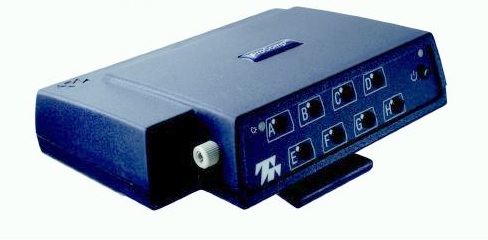
The ProComp Infiniti is an 8 channel, multi-modality encoder that has all the power and flexibility you need for real-time, computerized biofeedback and data acquisition in any clinical setting.

The first two sensor channels provide ultimate signal fidelity (2048 samples per second) for viewing RAW EEG, EMG and EKG signals. The remaining six channels (256 samples/sec) can be used with any combination of sensors, including EEG, EKG, RMS EMG, skin conductance, heart rate, blood volume pulse, respiration, goniometry, force, and voltage input.

ProComp Infiniti(TM) offers internal, user-activated calibration to ensure that you can always obtain the highest quality signal, without the costly downtime associated with factory re-calibration.

In short, the ProComp Infiniti covers the full range of objective physiological signals used in clinical observation and biofeedback.

Housed in an ergonomically designed case and requiring only a USB port, ProComp Infiniti can be used with any IBM-compatible laptop or desktop PC. What's more, ProComp Infiniti can capture data in real time by connecting directly to the PC via fiber-optic cable, or it can store data on a Compact Flash memory card for uploading later to the PC.

Official Website: Biofeedback Training Houston

More Info Click Here: Biofeedback Instruments 

Friday, 2 November 2018

How Biofeedback Training Reduces Stress

Biofeedback training is an effective method for reducing the negative effects of stress.  There are many sources of stress including politics, natural disasters, terrorist acts, work, family, and financial problems, and traffic.  In this world of 24 hour TV and radio news plus news on our computers, we are constantly bombarded with stressful, negative information.  If that wasn’t enough we have smart phones, tablets, and smart watches with us at all times to make sure that we don’t miss anything.  Wherever we are we can stay up on what is happening.  Besides the information we get from news sources, we also get blogs and podcasts.  In addition to these stress sources, the people who we interact with who cause us stress are able to call, text, or email us 24 hours a day 7 days a week, 365 days a year.


Biofeedback Training Method of Reducing Stress

People need methods of reducing the negative effects of stress.  Many of the solutions that are offered are medications.  Even when they are effective they often come with unwanted side-effects.  Thankfully there are some non-drug methods of reducing stress.  Biofeedback training is one such method.  Biofeedback instruments measure muscle tension, skin temperature, skin conductance (sweat), breathing, heart rate, and brainwave activity.  With biofeedback training people learn to control the way their body reacts to stress by viewing a biofeedback device while they practice relaxation exercises..

Official Website: EEG biofeedback

More Info:  How Biofeedback Training Reduces Stress

Thursday, 22 February 2018

Biofeedback Resources International


Biofeedback/Neurofeedback Training and Seminars are designed to teach clinicians biofeedback fundamentals and cutting-edge applications.

About biofeedbackinternational

Biofeedback Resources International ... Providing quality biofeedback instruments and professional training for over 25 years

For More Info: Biofeedback Training New York

Sunday, 11 February 2018

Behavioral Health Trends in Medicine

Let’s face it, drugs are not the best answer to all medical conditions.  No matter what the symptom, there seems to be a medication to treat it. Whether it is indigestion, acid reflux, insomnia, anxiety, depression, hypertension, or headaches, there is a pill for it.  For the most part, these drugs only treat the symptoms temporarily.  They usually are not getting to the cause of the problem or stopping the symptoms permanently.


Behavioral health training is an area that takes into account a person’s behavior  and the role it plays in their health and overall well-being.  What are some of the things that a person does that can affect their health and well-being?  Here is a partial list: physical activity, eating, sleep, attitude or outlook on life.

Healthcare providers are beginning to acquire additional training so that they can help patients to become and stay more healthy.  Does your doctor follow the old drug model, asking what is the symptom and then quickly prescribing a medication?  If your doctor is incorporating behavioral health into their practice then they will be asking you about much more than your symptoms.  Some of the kinds of questions that you should expect to be asked are:  What kind of work do you do?  How much do you exercise?  What kinds of foods do you eat?  Do you smoke?  How much alcohol do you drink?  Do you use any drugs?  What is your social life like?  Are you married?  Do you have children?

These questions are not because the doctor just wants to get in your business.  All of these things can play a part in your health and well-being.   This is related to the idea that we are mind, body, and spirit and what affects one part affects the whole.  There are other elements outside of the person that can play a part in health and wellness that would also come under the heading of behavioral health like where you live and what the environment is.  Things like pollution, overcrowding, lack of proper nutritional food sources, and high crime which could make some kinds of exercise difficult can all have effects on a person’s health.

Some health care facilities are incorporating counseling and training in these areas so that patients realize the effects these factors can have and they work with them on what is in their power to make positive changes.  Some of these programs include patient education, meditation, biofeedback, exercise, yoga, nutritional counseling, and more.  Often when these kinds of things are addressed and lifestyle changes are made better results are gained than with medication or medication alone.
I no longer will even consider working with healthcare facilities or providers that don’t include working with me on the kinds of things that I can do or consider that could have an effect on my health in addition to advising me on medications that may help.

For More Info: Behavioral Health Seminars