Showing posts with label biofeedback resources international. Show all posts

Sunday, 19 July 2026

Neuronic LIGHT


$2,005.44

Portable 1070 nm Infrared Light Photobiomodulation Helmet with App Functionality


The Neuronic LIGHT is a helmet-like device that emits energy in the near-infrared spectrum.
It is designed by Neuronic, a German-US company, for use on the head to promote energy and relaxation. The device is intended for general wellness purposes and should be used as directed in the user manual. 

Address: 
109 Croton Ave, Ossining, NY 10562, USA

Phone no. +1 914-762-4646

More Info :  Neuronic LIGHT

Wednesday, 15 July 2026

Discovery 24 w/ Impedance Lid and BrainAvatar 4.0 Discovery Acquisition


$8,290.00

The BrainMaster Discovery 24E introduces the next generation of EEG biofeedback in a high-quality, low-cost system answering the advanced needs of the clinical and research communities.

The BrainMaster Discovery 24E introduces the next generation of EEG biofeedback in a high-quality, low-cost system answering the advanced needs of the clinical and research communities. It incorporates 24 channels of EEG Biofeedback using technology based upon the continued evolution of the BrainMaster series of biofeedback monitors and trainers. Incorporating low-noise DC-sensitive amplifiers, 24-bit analog-to-digital converters, an optically and magnetically isolated USB interface, and compatibility with a range of software, it is the natural choice for multi-channel EEG.

This system features 24 channels of EEG Biofeedback recording including: 22 channels connected to a standard electrode cap, plus 2 channels of differential inputs with separate references, useful for monitoring any of a wide range of EEG or related potentials. It offers 256 samples per second on all channels, with 24-bit resolution, and an amplifier bandwith from DC (0.000 Hz) to 80 Hz. A lightweight, portable device, it is ideal for use with laptop computers for remote or home training, as well as in clinical or laboratory use. The unit is entirely powered by the USB interface, eliminating the need for batteries, while maintaining client safety.

A new built-in continuous impedance monitoring capability is now available as an option with the Discovery 20 amplifier. Using the same proven approach as the Atlantis devices, this hardware upgrade can be provided for any existing Discovery amplifiers, providing continuous measurement of all sensor impedances. Sensor impedance values can be read into the BrainAvatar 4.0 software (optional) and displayed on a live head map, revealing instantaneous and continuous monitoring or sensor impedance values.

More info :  BrainMaster Discovery 24E


Thursday, 9 July 2026

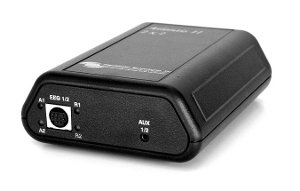
Atlantis II | PMD biofeedback

 Atlantis II

$2,195.00

ATLANTIS II is a 2×2 design, with two channels of EEG and two channels of AUX

ATLANTIS II is a 2×2 design, with two channels of EEG and two channels of AUX signals for additional biofeedback modalities. Includes continuous realtime impedance checking and recording; Total Immersion with photic, vibratory and auditory feedback. Available for clinical use or practition supervised remote (home) EEG training. Future 24 bit USB technology. The perfect entry as well level and system for practitioners.
ATLANTIS I and II: Biofeedback with Impedance checking; USB; Direct Current (DC) and Slow Cortical Potential (SCP) measurement, using Triamp amplifier design; (Estimated field testing expandability w/3.4 software evolving through 4Q 2013)

What is included in this package:

    1 – Atlantis II
    1 – 2 Channel Cables
    1 – 5 – 18″ Gold Electrodes – Cup
    1 – USB Cable
    1 – Trial 10/20 Paste
    1 – Trial NuPrep Gel
    1 – BrainMaster Carrying Case
    1 – BrainMaster 3.0 Clinical Software License
    1 – Complimentary 1 year Affiliate Membership

More Info : Atlantis II | PMD biofeedback

Tuesday, 7 July 2026

Atlantis I Clinical Pro System

 $3,295.00

ATLANTIS I is a 4×4 design ideal for additional biofeedback modalities

ATLANTIS I is a 4×4 design (with four channels of EEG and four channels of AUX signals) ideal for additional biofeedback modalities. Includes continuous real-time impedance checking and recording; Total Immersion with photic, vibratory and auditory feedback. Evolving 24 bit USB technology.
ATLANTIS I and II: Biofeedback with Impedance checking; USB; Direct Current (DC) and Slow Cortical Potential (SCP) measurement, using Triamp amplifier design; (Estimated field testing expandability w/3.4 software evolving through 4Q 2013)

What is included in this package:

  • 1 – Atlantis I
  • 2 – 2 Channel Cables
  • 2 – 5 – 18″ Gold Electrodes – Cup
  • 1 – USB Cable
  • 1 – Trial 10/20 Paste
  • 1 – Trial NuPrep Gel
  • 1 – BrainMaster Carrying Case
  • 1 – BrainMaster 3.0 Clinical Software License
  • 1 – Complimentary 1 year Affiliate Membership

Atlantis I $ 3,295.00

Address: 
109 Croton Ave, Ossining, NY 10562, USA

Phone no. +1 914-762-4646

More Info : PMD biofeedback


Wednesday, 24 June 2026

Thought Technology Procomp-2


Thought Technology Procomp-2 with choice of 2 sensors EMG, Temperature, Skin Conductance, Respiration, and EEG sensors (includes supplies)

$390.00

Equipment must be returned in good condition at the end of the rental.
The renter will be responsible for any damage to the equipment.
The renter is responsible for return, insured shipment of the equipment at the end of the rental.

Equipment must be returned in good condition at the end of the rental. The renter will be responsible for any damage to the equipment. The renter is responsible for return, insured shipment of the equipment at the end of the rental.

 More Info : Thought Technology Procomp

Tuesday, 9 June 2026

EKG Wrist Straps


Thought Technology: EKG Wrist Straps provide fast, convenient placement of electrodes for measuring EKG from the wrists. Non-latex medical straps are easy to apply, comfortable, and washable; and electrodes are replaceable. Combined with BioGraph Infiniti’s advanced heart rate algorithm, which is designed to operate in the presence of heavy EMG artifact, the EKG wrist straps allow for quick, easy and robust EKG and heart rate variability biofeedback.

EKG Wrist Straps $78.00 

Buy Now :  EKG Wrist Straps

Tuesday, 4 November 2025

Why Proper Neurofeedback Technician Training Matters

 As neurofeedback continues to grow in popularity, more practices are looking for ways to integrate it into their services. Many doctors attend professional neurofeedback training to gain the skills they need, then return to their clinics and try to pass along what they’ve learned to a staff member, hoping to turn them into a neurofeedback technician.

While this may seem practical, it often leads to gaps in knowledge and effectiveness. A staff member trained informally by a doctor usually learns only how to perform the sessions, but not why they are doing the things they do.

The Limits of “On-the-Job” Training

When a staff member learns only the steps of running a session, they are essentially “going through the motions.” They might know how to attach sensors, start the equipment, and guide the client through the session, but they lack the deeper understanding of the science and process of neurofeedback.

This creates several problems:

  • No understanding of protocols: Neurofeedback is not one-size-fits-all. Protocols need to be selected, monitored, and sometimes adjusted. Without proper training, a technician won’t understand how or why changes are necessary.
  • Reduced quality of care: Without grounding in the science, technicians can’t explain the process to clients or recognize when something isn’t working as it should.
  • Risk of errors: A technician who only follows a script may miss subtle but important details that affect client progress.

    More Info : biofeedback and neurofeedback training Pennsylvania 

Tuesday, 29 April 2025

BCIA Certification Biofeedback Seminar | BCIA Certification Training


Ready to expand your clinical skills and help clients achieve real results?

Join our Professional Peripheral Biofeedback Program — BCIA-approved and available in both in-person and online formats to suit your schedule and learning preferences.

✔️ Flexible training options: attend in person or online
✔️ BCIA-accredited curriculum
✔️ Learn EMG, temperature, and skin conductance biofeedback
✔️ Ideal for mental health professionals, PTs, educators, and wellness practitioners

Gain the confidence and credentials to integrate biofeedback into your practice — on your terms.

For more information or continuing education purposes, visit: BCIA Certification Biofeedback Seminar

Friday, 10 May 2024

Biofeedback Training for Psychologists

 Psychologists spend a lot of time performing psychological tests and doing talk therapy with their clients.  Many psychologists also have been adding tools and interventions like EMDR and biofeedback to help their clients.  To learn how to use biofeedback, psychologists can get training online.  This can be convenient because it doesn’t involve travel.  On the other hand, it doesn’t allow for the hands-on practice that takes place in an in-person training session.  It can also be beneficial to meet and work with other students during the training.  The networking and teamwork that happens can be invaluable.

Some training also includes APA Continuing Education credit which many psychologists need to maintain their license to practice.  There are many topics that could count towards this credit.  Biofeedback happens to be one of them.  The number of hours required for BCIA (Biofeedback Certification International Alliance) certification is 36 for Neurofeedback (A specialty area of biofeedback or EEG Biofeedback) and 42 hours for Biofeedback, otherwise known as peripheral biofeedback.

psychologists are happy to find out that they can earn so many credits while learning an interesting new skill that they can use in their work.  Biofeedback brings the body into therapy.  It allows the measurement and feedback of signals that change in response to stress or relaxation.  These signals include muscle activity, skin temperature, sweat activity, breathing, and heart rate/heart rate variability.

Neurofeedback brings the brain into therapy.  It allows the measurement of brain activity and feedback of the signals.  These signals are related to different states like excitement, focus, and drowsiness, etc.  With the feedback a client can learn to regulate the activity which can improve symptoms.

I still think that most psychologists have not been trained in biofeedback and are not able to provide it to their patients.  Many people seeking a biofeedback provider have difficulty finding one near them.  There is a need for more psychologists to be trained in biofeedback and neurofeedback.

For More Information, read more

Register Now!!

Wednesday, 21 February 2024

BrainMaster Atlantis II (2×2) Clinical Pro System


ATLANTIS II is a 2×2 design, with two channels of EEG and two channels of AUX signals for additional biofeedback modalities. Includes continuous realtime impedance checking and recording; Total Immersion with photic, vibratory and auditory feedback. Available for clinical use or practition supervised remote (home) EEG training. Future 24 bit USB technology. The perfect entry as well level and system for practitioners.
ATLANTIS I and II: Biofeedback with Impedance checking; USB; Direct Current (DC) and Slow Cortical Potential (SCP) measurement, using Triamp amplifier design; (Estimated field testing expandability w/3.4 software evolving through 4Q 2013)

What is included in this package:

  • 1 – Atlantis II
  • 1 – 2 Channel Cables
  • 1 – 5 – 18″ Gold Electrodes – Cup
  • 1 – USB Cable
  • 1 – Trial 10/20 Paste
  • 1 – Trial NuPrep Gel
  • 1 – BrainMaster Carrying Case
  • 1 – BrainMaster 3.0 Clinical Software License
  • 1 – Complimentary 1 year Affiliate Membership
Get Complete Information : BrainMaster Atlantis

Atlantis II $1695.00

BUY NOW: Click Here

Sunday, 20 March 2022

Biofeedback Training in Miami


This year I started a project of reaching out to all of the HBCUs (Historically Black Colleges and Universities).  I want to find out if they are using biofeedback and neurofeedback.  I am interested to find out how many of them are using biofeedback and how they are using it.  If they are not already using biofeedback, I want to introduce it to them and help them begin to find out the ways it can be used.

I have started with the states closest to New York since that is where I am.  This is also where we do most of our training.  I am looking at the schools in Florida next since we have also been doing biofeedback and neurofeedback training in Miami, Florida for many years.

I looked at the list of HBCU institutions in Florida and found that there are four listed as being located in the state of Florida; Bethune Cookman University in Daytona Beach, Edward Waters College in Jacksonville, Florida A&M University in Tallahassee, and Florida Memorial University in Miami.

Since the other schools are between 260 and 480 miles from Miami, I will start by contacting Florida Memorial University in Miami and then continue with contacting the other institutions.

I have been involved with providing biofeedback equipment and training and doing presentations on stress management and physiological monitoring at many colleges and universities.  The universities I have worked with include Pace, NYU, Yale, NC State, Rutgers, Brooklyn College, Denison, Drury, Otterbein, Bradley, University of Colorado, Idaho State University, Seton Hall, Fordham, Campbell, and Vanderbilt University.

Mo Read This Blog : Biofeedback Training in Miami

Monday, 21 February 2022

The Hidden Challenge in Alcohol and Drug Abuse

“Alcohol and drugs are essential to my creative process” is a thought, sometimes a confession made, usually privately, by millions of creative people, many of them at the pinnacle of success in their fields. Yet, I have heard very little serious discussion by substance abuse professionals about the profound implications of this phenomenon.

Some say that psychoactive drugs will be with us forever and maybe they will. However, my life improved immensely and was probably saved by my liberating myself from the pleasures, enthusiastic bursts of creativity and agonies of alcohol and smoke.

In fact, our society has declared a “war” on drugs and a sort of “police action” on alcohol. Humorous, isn’t it since far more damage is done in the aggregate by alcohol than by all other drugs combined? As a society we believe that we must solve this catastrophic problem; or at least understand it enough so that we reduce the destructive pressure on our culture. Having come from a family of beautiful people who have been tragically impacted by alcohol and other drugs, I have had an intense interest in how and why this disaster happened to my dearest loves and beyond that to our civilization as a whole. What is the most effective way to heal the damage already done and reduce the problem in the future?

This led me into one of the most fascinating investigations of my life. I delved deeply into all of the conventional wisdom I could find… and I did most of my investigation while continuing to drink and smoke. I was what you call a highly functional substance abuser. In fact, my problem was never diagnosed by a professional or even a friend. I had to come to the realization that I had a substance abuse problem through self study.

Self study which involved a lot of EEG biofeedback and meditation.

In the course of these studies I had what I think is at least a relatively original insight. This insight enabled me to walk away from the substances that had become so integrated with my own intellectual, creative, even spiritual life. This personal discovery made by many millions of others before me was that I must quit all by myself. Another critical aspect of the discovery provided the burning sense of mission required to be successful as well as the realization that I must discover how to do this as though it was being done for the first time ever. The path to success came to me in a number of progressive meditative reveries.

More Read This Blog :  The Hidden Challenge in Alcohol and Drug Abuse

Monday, 31 January 2022

Neurofeedback Training in Florida


Florida is an important place for neurofeedback.  It is the home of the Florida Biofeedback Society which is based in Boynton Beach, Florida.  This is one of the most active biofeedback organizations in the nation.  It is a resource for potential clients looking for biofeedback and neurofeedback providers.  The website is  http://www.floridabiofeedback.org/  They also have workshops where providers can receive training and continuing education credit.  The Florida Biofeedback Society offers a membership that includes a subscription to its Florida Biofeedback publication, networking opportunities, as well as other perks.

Applied Neurosciences Inc. is an EEG software company based in Saint Petersburg, Florida.   They develop software for clinical and research applications of EEG including brain mapping and neurofeedback training.  The company was founded by Robert Thatcher.  Their flagship software product is the NeuroGuide software program.  It is one of the most known and important software programs in the neurofeedback field.  Many neurofeedback practitioners use NeuroGuide and other Applied Neurosciences software.

There are many drug treatment centers in Florida partly due to the continuing opioid problems there.  Neurofeedback is also used as a therapy for substance abuse.  Although only some centers currently offer neurofeedback, I expect that more of these centers will be offering this service.

Florida is a popular retirement destination.  Incontinence is a problem that many older people suffer with.  Biofeedback is an excellent therapeutic intervention for incontinence.  Its efficacy is highly rated.

Many older people are also concerned with loss of cognitive function and memory.  Neurofeedback is effective for improving cognitive function and shows promise in the area of memory because of its ability to stimulate neuronal connections.

Another important connection between biofeedback and Florida is Dr. Bernie Brucker.  He was the director of the Brucker Biofeedback Center at the University of Miami Miller School of Medicine.  He served as past president of the Academy of Rehabilitation Psychology, past President of the State of Florida Brain and Spinal Injury Advisory Council Association, and president of the Academy of Rehabilitation Psychology and the Florida Brain Injury Association.  He was known for using surface EMG biofeedback and operant condition protocols for helping people with paralysis and other disorders, regain muscle function in Southern Florida.

As you can see, neurofeedback and biofeedback training are well established and important in the state of Florida.  I am looking fo biofeedback training rward to continuing to help people get started in learning these skills by offering training in the area.  Training opportunities are posted at www.biofeedbackinternational.comas well as www.bcia.org

Harry L. Campbell

914-762-4646 – Harry@biofeedbackinternational.com

Author of What Stress Can Do, Available on Amazon.com

Biofeedback Resources International Corp.

More Info :  Neurofeedback Training in Florida

Friday, 21 January 2022

Neurofeedback Equipment Applications


What is neurofeedback equipment used for?  It is used for assessment, clinical therapy, and performance enhancement/peak performance.  There is also medical EEG equipment that is used diagnostically without the purpose of using the EEG measurement therapeutically.  I will not be addressing medical EEG equipment in this article.  Neurofeedback means that the EEG is being measured and the data fed back to the subject in a way that they can learn to regulate the activity.

There are a variety of devices from ones that measure from one location on the head to ones that measure up to 32 or more locations on the brain.  The ones with 19 or more channels are designed for doing brain mapping.  During this process, EEG data is recorded from 19 or more sites.  The accompanying software compares the data to that from a normative database to determine which locations have “normal” activity and which have an activity that is 1, 2, 3, or more standard deviations lower or higher than normal.  This information, along with information from a client intake, is used to determine if dysregulated EEG activity is associated with presenting symptoms.  A protocol is recommended or developed to then train the brain using the neurofeedback equipment to a more regulated state with the hopes of decreasing symptoms.

The follow-up neurofeedback training sessions may be done with the same 19 or more channel systems or equipment with fewer channels.  Even 1 channel can be used to train EEG activity to change in a single area.  Some other protocols require 2-4 channels so that the left and right and or front and back of the brain can be trained at the same time.  19 or more channels may be trained so that the entire brain is trained including certain networks, or different areas that work together can be trained together.

Examples of the clinical applications of neurofeedback equipment include ADHD (Attention Deficit and Hyperactivity Disorder), Anxiety, Depression, Insomnia, TBI (Traumatic Brain Injury), PTSD (Post Traumatic Stress Disorder), and Substance Abuse.

Examples of non-clinical peak performance/performance enhancement applications include improving cognitive function for academic performance, reducing test anxiety for academic performance, reducing anxiety and improving focus for sports or other types of performance, and using neurofeedback equipment as an aid for helping people to get into a meditative state by monitoring brain wave activity and giving feedback when the brain is in a meditative state and when it is not.

Harry L. Campbell

914-762-4646 – Harry@biofeedbackinternational.com

Author of What Stress Can Do, Available on Amazon.com

Biofeedback Resources International Corp.

www.biofeedbackinternational.com


More info :   Neurofeedback Equipment Applications

Thursday, 13 January 2022

Performance/life Enhancement Training Integrating Biofeedback with Special Emphasis on Neurofeedback


R. Adam Crane BCIA Senior Fellow, BCIAEEG, NRNP Diplomate

This is an edited excerpt from our forthcoming book, The Process, and given as a talk at the Palm Springs Neurofeedback conference in February 1998.

I’m Adam Crane, president of American BioTec and CapScan corporations. We have decided to substantially increase our commitment to the emerging art and science of Peak Performance, Optimum Functioning, or as we prefer to call it Performance / Life Enhancement. We have introduced the term MindFitness which we believe will work well as informal language for the general public. BioFeedback and especially NeuroFeedback is a critically important component of our first program, which is called The Process- MindFitness- Stage I .

We believe that NeuroFeedback provides a niche opportunity in the MindFitness, sub clinical symptom, educational market for those practitioners ready and able to enhance their own lives by making a place for themselves in this already huge and growing field. Those of you who want to get into the nitty gritty of our program, The Process, can come to our workshop or even better our three-day training program in June. But the purpose of this talk is to try to overview the big picture together and perhaps suggest some ways we can improve cooperation, creativity and productivity in our field.

As we enter this adventure of the mind (body & spirit) one of the earliest challenges we face is communication – what we really mean with each other. There already exists and is evolving both a formal and an informal language. The better we understand and use that language the more the phenomenon of intelligence unfolds in our own individual lives and like a stone hitting the water spreads in waves touching the lives of others. In some cases igniting these concepts in their minds, in other cases adding fuel to a flame already begun. For me the term Peak Performance refers to a subset of what we are so excited about. I prefer the admittedly awkward / double barreled term of Performance/Life Enhancement . Optimum Functioning has a nice feel to it as well, but for this talk let’s adopt Performance Life Enhancement or MindFitness. The director of the Center for Performance Enhancement at West Point military academy recently joined our faculty. Note they have been using the term Performance Enhancement for many years.

I’m sure everyone in this room already understands there is something extraordinary emerging out of the marriage of MindFitness and sublclinical symptoms with NeuroFeedback. It is also clear that we are all doing rather different versions of it. Frankly, I believe our version, dubbed The Process, may be self limiting because we are extremely aggressive about making it as heuristic a program as possible (define) and we have some unusual ideas about the role that winning and competition play in determining quality of life. We define heuristic as the method in which the learners discover for themselves while reducing dependence on past experience and outside authority to the minimum wisdom deems necessary.

Now, we think we can adapt our program to a number of different markets (Business, Education, Sports, Art and Personal Growth) and still stay true to heuristic principles but the proof is in the doing. Rob Kall challenged me to outline our two-hour workshop in one paragraph and although we go much further than this.

That paragraph reads:

  1. Garfield is correct, the most important thing is a sense of mission. NeuroFeedback can play a powerful role in the alignment of that sense of mission with highest personal values. This adds power.
  2. MindFitness is already a substantial industry. NeuroFeedback is adjunctive and provides a niche opportunity if used extremely skillfully. We are tiny tree frogs ambitiously contemplating conquering the sea.
  3. One of the critical keys to success in this field is a training program that stands on its own with or without NeuroFeedback. Being forced to walk the talk is an uncomfortable blessing of infinite potential.
  4. MindFitness transcends the limitations of managed care and attracts trendsetters thereby feeding the clinical practice at the same time.
  5. The NeuroFeedback component of Performance Life Enhancement requires more training time than clinical NeuroFeedback. Therefore, equipment and per capita training costs must dramatically decrease in order to reach more of the population. This means group training and quality personal trainers.

The purpose of this brief talk is to share with you our view of the big picture and some sense of the underpinnings of our model. Some of these thoughts may be repeated in the workshop since a number of the people coming to the workshop are not with us today. Our view of the best way to deliver The Process is to script the entire 20 hour program… i.e. so many minutes for this concept or exercise, etc

More info :  Performance/life Enhancement Training Integrating Biofeedback with Special Emphasis on Neurofeedback

Wednesday, 5 January 2022

Slow Waves, Profound Attention, a Compass for the Gifted Thinker

 Presentation at 2nd Annual SSNR Meet Las Vegas May 1994

The late Edward’s Deming is arguably the most inspiring statistical engineer and business thinker of the century. He introduced the term “Profound Knowledge” in order to differentiate between the kind of knowledge which really breeds quality and healthy growth and far less effective even counter productive forms of knowledge.

The historian Oswald Spengler said that a hypothesis does not have to be absolutely correct as long as it is useful. A number of people have told me they consider the following hypothesis useful.

This hypothesis holds that thought is matter and (like movies) thinking is a material process and an image making process based on memory. Furthermore, high order, what could be termed the capability for “Profound Attention” is probably the most important asset a human being can have.

The Capacity for “Profound Attention” can in many if not most human beings be enhanced. This enhanced, “Profound Attention” carries with it the capability of conscious observation of thought and the implications of this are that this ability to watch oneself think is the healthiest possible way to manage and improve the quality of thought. This observation itself is a kind of “field”. Einstein said, “The field is the soul governing agency of the particles”. In this case the particles are thought. The implication follows that one of the most effective ways in the history of learning to enhance this “Profound Attention” and improve the quality of thought is slow wave, relatively synchronous Neurofeedback training.

This hypothesis further asserts that as cartographers of consciousness, we are now being forced to define much more carefully terms that have hitherto been taken far too much for granted. We must now come to much more precise definitions of intelligence, thinking, imagery which transcends thinking, attention, etc in order to clarify what we really want to reach for.

If the ancients (and many of the modern masters) are correct and the problem is that psychothenia, over thinking, “unconscious” or unobserved thinking is the fundamental barrier to the natural intelligence and creativity latent in humans and if it is true that in most “normals” slow wave (ALPHA/THETA) but mostly mid-range ALPHA training can enhance the ability to profoundly attend to internal (thought, archetypical imagery, etc) and external phenomena simultaneously, in real time, then indeed ALPHA/THETA Neurofeedback, skillfully managed is one of the most valuable educational tools ever developed.

More info :  Slow Waves, Profound Attention, a Compass for the Gifted Thinker

Monday, 13 December 2021

The History of Muscle Dysfunction and SEMG

 Jeffrey R. Cram, PhD and Maya Durie, MEd, CMT

Abstract

The history of muscle pain and dysfunction is viewed through the lens of a four factor theory of histologic (tissue related) issues, psychologic (emotional) issues, sensory motor (movement) issues and biomechanical (postural) issues. The historical antecedents of both bodywork and surface electromyography are reviewed.

Key words: Surface EMG, SEMG, bodywork, trigger points, posture, emotions, movement.

Note: Parts of this article have appeared in The History of SEMG, Jour App Psychophys and Biof, In Press.

Humans have had to deal with sore muscles since the beginning of time. Initially, muscle assessments and treatments were conducted by hand and during the last century, the use of electronic instruments came into play.

To put muscle function and the clinical use of Surface electromyography (SEMG) into a perspective of history, is seems prudent to utilize a broad nomothetic net or conceptual framework. In Clinical Applications for Surface Electromyography, Kasman, Cram and Wolf (1998) consider chronic muscle dysfunction from a four fold perspective: Histologic (Tissue related issues); Psychologic (Psychophysiology and Emotions), Sensorimotor (Movement) and Mechanical Dysfunction (Cumulative Trauma, Posture etc). In this article we will provide a brief historical overview related to each of these four areas. This will provide a deep background for the emergence of the clinical use of SEMG, including information on the history of body work, psychophysiology, rehabilitation and the emergence of electricity and SEMG instrumentation.

Tissue Related Issues

We will begin with issues pertaining to the tissues of the body. The muscle, as an organ system, contains many sensory mechanisms. The muscle spindles tell the nervous system about the instantaneous length and force of contraction of segments of muscle tissue. The golgi tendon organ measures the actual force which the muscle is exerting and the rufini nucleus of the joints informs the nervous system of the relationship of angles of the bones. However, it is the free nerve ending within the muscle that senses local pain. And it is metabolic disturbances such as too much (lactic) acid or too much internal pressure due to swelling, congestion or edema, which activate the free nerve ending.

From a clinical point of view, up until the last two centuries, palpation and observations about movement and posture were the only tools available for assessing muscle oriented pain. Through the manual sense of touch, the practitioner can learn to feel many things. Is the muscle tissue hard to the touch? Does it feel stiff? Does it have lumps, tough fibers, etc. or is it soft, supple and relaxed? What does the fascia feel like? Is there a normal cranial-sacral rhythm? As you move the body passively through its range of motion, does it seem restricted suggesting a shortened muscle resting length? During active movement, does it appear that the body is using the correct muscles for the movement or is there a substitution pattern? Is the patient afraid of movement due to pain? Has a trauma become lodged in the nervous system or even the muscle tissue itself? Can one see or feel problems with ligament laxities or joint fixations? These are just some of the examples of questions we want to address, both by hand and by instrument. . Thus, one could think of body work as a means to help normalize the disturbance of tissue that might foster and create muscle pain and SEMG as an instrumented way of assessing some of these conditions.

More Info :  The History of Muscle Dysfunction and SEMG

Monday, 29 November 2021

Biofeedback, Medical or Educational? | Biofeedback Equipment

Is biofeedback medical or educational?

Biofeedback equipment has been around since the 1960s, yet some people still don’t know about it.

Being able to use technology to help learn control over physiology has almost endless applications.

Many people have been working hard for a long time to make biofeedback more accepted by the medical system.  There are physical medical applications like tension and migraine headaches, neck pain, back pain, other types of chronic pain, muscle spasm, hypertension, and asthma.  There are also mental health applications like ADHD, anxiety, PTSD, and depression.

The Biofeedback Certification International Alliance (BCIA) provides certification for those meeting their established requirements including education, experience, mentoring, and a written exam to evidence their qualifications to provide biofeedback professionally.  The Association for Applied Psychophysiology & Biofeedback is a professional association for people who provide biofeedback.  They offer education, hold an annual conference, and publish a magazine and scientific journal as well as books on the subject.  All of this has helped biofeedback to become accepted by the physical and medical fields to a degree.  Many of us in the field of biofeedback are still disappointed in the reluctance of some insurance companies to reimburse health care professionals for providing biofeedback to their clients.  This sometimes discourages people from providing biofeedback in their practices purely financial reasons.  I have actually had doctors tell me that they believe biofeedback is really good for their patients but they aren’t doing it because one of the main insurance carriers their patients have doesn’t reimburse for it.  This is a shame.  If a therapy is effective, healthcare providers should be able to be paid for providing it.  This fight continues.

Another way to look at how biofeedback equipment is used is as education which can happen outside of the medical world.  We use technology to learn all of the time.  We use technology to help other people learn.  What if you are using technology to help someone learn about their physiology?  That is what we are doing with biofeedback.  This can open up a whole other world outside of the medical field.  If you are not treating a clinical, diagnosable, physical or mental health condition then you can use biofeedback to teach someone an increased level of control over things like their breathing, muscle tension, heart rate, skin temperature, or even brain wave activity.  It is still powerful but it doesn’t have to be medical.  It can actually be fun and rewarding to learn this kind of control.  It doesn’t only have to be used for someone who has something “wrong with them”.  People do pay for education.  Even if health care insurance doesn’t pay for biofeedback there are still ways to get paid for providing it.  Coaching or teaching using biofeedback equipment as an educational tool and charging a fee for it is a business model that can work well.  It is also a way that people can access biofeedback learning without having to do it through the medical world.

So, the answer is that biofeedback is both medical and education.  It all depends on how it is being used.  In reality, it is an educational tool that can be used as a medical intervention.

Harry L. Campbell

914-762-4646 – Harry@biofeedbackinternational.com

Author of What Stress Can Do, Available on Amazon.com, Youtube.com

Biofeedback Resources International Corp.

More Read :  Biofeedback, Medical or Educational? | Biofeedback Equipment

Tuesday, 16 November 2021

Less Stress for the Holidays

The start of the holiday season is upon us.  This should be a wonderful time to look forward to and yet many people experience this as one of the most stressful times of the year.  What makes it stressful? The crowds and expense of shopping, the traffic, spending time with people who get on your nerves – shall I go on?  I’m sure you could easily add to my list.

What can you do to make it less stressful?

Give thanks. The season starts with the Thanksgiving holiday.  Take some time to actually give thanks for all of the things that you are blessed with.  All of us kind find at least a few things to be thankful for.  Here is a list of things you can pick through to find something that applies to you:

A place to live

Food to eat

A job

Family

Friends

Good Health

Sight

Clothes to wear

A car or bus or train fare

The ability to walk

Now I know there may be some who don’t have all of these things but I believe that there are few who don’t have at least one.

Spend some time thinking about what the holidays are supposed to be about.

You may get the opportunity to see some people that you hardly ever see.  Even if you don’t always get along great take it for what it is worth and find something enjoyable about spending time with them.  Remember the holidays don’t last forever.  It will soon be over and we all get back to our regular lives starting off a new year.  Don’t make it bigger than it is.

Remember to breathe.  If you start to feel stressed find a place you can be alone for a few minutes and take a few slow deep breaths to take the edge off and then rejoin the group.

If you set your mind to enjoy the holidays you probably will.

More Info : Less Stress for the Holidays

Tuesday, 9 November 2021

Attention Or Sleep, Problems with Sleep related to ADHD


You wouldn’t want to have to make that choice for children.  Many children diagnosed with ADHD are prescribed medications to help with the symptoms.  Some popular medications in use are Ritalin, Concerta and Adderall.  These medications are helping some people.  The drug companies themselves are listing sleep problems as a possible side effect.

According to a November 23, 2015 online article in Pediatrics, research analysis led by Katherine Kidwell of the University of Nebraska-Lincoln found that children given stimulants tended to have sleep problems more often.  One of the studies compared the sleep of children given methylphenidate (generic Ritalin) with children given a placebo.  The children who took the generic Ritalin slept an average of 20 minutes less per night.  They also found that taking a stimulant medication more often during the day caused a child to take longer to fall asleep at night.

Dr. Trevor Resnick, who is chief of pediatric neurology at Nicklaus Children’s  Hospital in Miami says that it is extremely important  that all children get a good night’s sleep for healthy brain development.  It is his belief that only a small percentage of children will develop problems related to ADHD medications though.

I believe based on experience and reading that many attention problems may be due to poor sleep.  If the brain is tired it is not going to work as efficiently.  It is harder to learn, focus, and pay attention when you are sleep deprived.  Some problems are due to children not getting enough sleep.  This can be caused by going to bed too late.  As Dr. Michael Thompson of the ADD Centre in Toronto Canada says, another problem is that before many kids go to bed they are watching stimulating TV programs and playing stimulating video games.  When they finally do go to bed their brains are still too stimulated for quality sleep for some time.  Most children also have to wake up very early to get to school on time.  That doesn’t help things either.  Now this research review is showing that the medications intended to improve attention and hyperactivity symptoms may cause sleep problems in some of the children they are intended to help.

Many parents are now seeking alternatives methods of helping their children with ADHD symptoms.  Neurofeedback therapy is one option.   Neurofeedback uses EEG biofeedback instruments that measure and feedback the electrical signals from the brain.  The information is fed back in a way that helps a person learn how to regulate their brain activity.  Some of the brainwaves are slower like the ones that are present more during sleep.  Others are faster like the ones present more while solving a math problem.  The power of these waves are sometimes out of balance in people with ADHD.  Neurofeedback can help a person learn how to rebalance these brainwaves.  This can lead to improvement in symptoms.

More Read This Blog :  Attention Or Sleep, Problems with Sleep related to ADHD

For listings of certified neurofeedback providers visit www.bcia.org and click on the consumers tab and select find a practitioner.   If you are interested in becoming a provider you can visit our website and start by taking a free online introduction to neurofeedback course here: http://biofeedbackinternational.com/free.htm


Harry L. Campbell

President, Biofeedback Resources International

www.biofeedbackinternational.com

Author of the book “What Stress Can Do”

www.createspace.com/3839220

YouTube: https://www.youtube.com/user/BiofeedbackResources

Facebook: https://www.facebook.com/pages/Biofeedback-Resources-International-Corp/118594803123