Showing posts with label Biofeedback Training. Show all posts

Friday, 10 May 2024

Biofeedback Training for Psychologists

 Psychologists spend a lot of time performing psychological tests and doing talk therapy with their clients.  Many psychologists also have been adding tools and interventions like EMDR and biofeedback to help their clients.  To learn how to use biofeedback, psychologists can get training online.  This can be convenient because it doesn’t involve travel.  On the other hand, it doesn’t allow for the hands-on practice that takes place in an in-person training session.  It can also be beneficial to meet and work with other students during the training.  The networking and teamwork that happens can be invaluable.

Some training also includes APA Continuing Education credit which many psychologists need to maintain their license to practice.  There are many topics that could count towards this credit.  Biofeedback happens to be one of them.  The number of hours required for BCIA (Biofeedback Certification International Alliance) certification is 36 for Neurofeedback (A specialty area of biofeedback or EEG Biofeedback) and 42 hours for Biofeedback, otherwise known as peripheral biofeedback.

psychologists are happy to find out that they can earn so many credits while learning an interesting new skill that they can use in their work.  Biofeedback brings the body into therapy.  It allows the measurement and feedback of signals that change in response to stress or relaxation.  These signals include muscle activity, skin temperature, sweat activity, breathing, and heart rate/heart rate variability.

Neurofeedback brings the brain into therapy.  It allows the measurement of brain activity and feedback of the signals.  These signals are related to different states like excitement, focus, and drowsiness, etc.  With the feedback a client can learn to regulate the activity which can improve symptoms.

I still think that most psychologists have not been trained in biofeedback and are not able to provide it to their patients.  Many people seeking a biofeedback provider have difficulty finding one near them.  There is a need for more psychologists to be trained in biofeedback and neurofeedback.

For More Information, read more

Register Now!!

Monday, 22 March 2021

Biofeedback and Neurofeedback in Talk Therapy | Neurofeedback Training

Psychologists and psychotherapists are not all just having people sit in a chair or lay on a couch to just have people talk to them about their problems.  They are using evidence-based, science-based tools to help them address the body as well as the mind.  Science is proving that the body is involved in problems like anxiety, PTSD, and trauma.  It’s not all in the mind.  The mind has to work through the brain, so problems of the mind also involve the brain.

Neurofeedback is among the tools that can be used to affect the brain.

Encouraging the brain to increase or decrease various signals that can be picked up with neurofeedback equipment can help to train the brain to decrease unhealthy patterns that may be related to clinical symptoms.

Experts including Stephen Porges, Ph.D., author of the Polyvagal Theory, and Bessel van dir Kolk author of The Body Keeps Score are two proponents of the idea that the body is very much involved with problems of the mind.  Talking alone often will not solve problems like anxiety, PTSD, and trauma.

EMDR – Eye Movement Desensitization and Reprocessing therapy, tapping, binaural sounds, singing, dancing, tai chi are among the tools that involve the body and can have an effect on connections and activity in the brain. Since neurofeedback directly records and gives feedback information from the brain, it also can help to normalize problematic patterns and activity in the brain.  Once the normalization takes place the talk therapy can be more effective.

While neurofeedback deals more specifically with brain activity in the central nervous system, peripheral biofeedback measures activity from the peripheral and autonomic nervous system.  When someone has anxiety, panic attacks, PTSD, or trauma, you can bet that they have at least one of the following: fast, shallow breathing, excess muscle tension, cold hands, sweaty hands, fast, erratic heartbeat.  Biofeedback allows measuring and training any or all of these signs that the body is reacting and out of balance.  It helps the therapist show their clients that the body is reacting and it can also tell them when it calms down and is more in balance.  Biofeedback equipment can be used as a training tool itself and it can be used as a way to monitor the effects of other tools a therapist is using.

Harry L. Campbell

914-762-4646 – Harry@biofeedbackinternational.com

Author of What Stress Can Do, Available on Amazon.com

Biofeedback Resources International Corp.

Get More Info : Visit Here : Neurofeedback  Training


Tuesday, 23 June 2020

How Will We Do Biofeedback Post COVID19?

Biofeedback is usually a face to face, one on one activity.  If you were providing biofeedback prior to the start of social distancing and stay at home orders, things have surely changed drastically for you very quickly.  Now what will we do?  Many of the people who provide biofeedback also provide psychotherapy.  It is much simpler to provide psychotherapy virtually than it is for biofeedback.  All you need is for the provider and the client to have a computer, smartphone, or tablet and access to a software program or application like GotoMeeting, Zoom, or Skype.  Even though this is considered simple, there can still be impediments.  Some clients don’t have smartphones, tablets, or even computers.  Some also do not have internet access.  If both parties do have access to the necessary technology then the sessions can take place fairly easily and inexpensively.
With biofeedback there is the added requirement of having some kind of biofeedback instrument technology.  Most biofeedback providers own and use equipment that costs thousands of dollars that they use with their clients in their office.  If you are going to work virtually then the clients need to have a biofeedback instrument at their home.  There are less expensive biofeedback devices that don’t have the same features and durability as the in-office professional systems.  Devices that I recommend for home or virtual biofeedback cost from $25 – $1,600.  There are many differences in devices including what modalities they measure, the type of feedback they give, and data storage and reporting functions.
You also need to decide if you will have your clients purchase or rent the devices from you or directly from an equipment provider.  You may also need to provide some basic training for your clients as to how to use the device and how to share data from their training with you.
We may have to do some biofeedback in this way at least temporarily.  I believe that this way of working will continue for some clients but not all.  Many clients enjoy the face to face experience and would prefer to be there with you.  I think that some of the benefit they receive is also from the energy they draw from you when they are in your presence.
When we are able to start seeing clients face to face again, we will need to be more vigilant with our procedures for cleaning sensors, cables, and caps between patients and handling of electrode gels, creams, and pastes to prevent the spread of infection.  More providers may decide to wear gloves when prepping and applying sensors to the client’s skin, and removing and cleaning the sensors.  Some may also decide to wear masks at least when they first start seeing clients in the office again and we get more guidance from the CDC, Center for Disease Control.
The COVID19 pandemic has brought about very interesting and challenging times and I am sure that we will get through them and be able to work with biofeedback clients face to face again even if it is in a different way.
Please share your thoughts about this topic with me and other readers.
For more information on biofeedback and neurofeedback devices that can be used with virtual biofeedback sessions visit: www.biofeedbackinternational.com

Tuesday, 5 May 2020

How Will We Do Biofeedback Post COVID19?

Biofeedback is usually a face to face, one on one activity.  If you were providing biofeedback prior to the start of social distancing and stay at home orders, things have surely changed drastically for you very quickly.  Now what will we do?  Many of the people who provide biofeedback also provide psychotherapy.  It is much simpler to provide psychotherapy virtually than it is for biofeedback.  All you need is for the provider and the client to have a computer, smartphone, or tablet and access to a software program or application like GotoMeeting, Zoom, or Skype.  Even though this is considered simple, there can still be impediments.  Some clients don’t have smartphones, tablets, or even computers.  Some also do not have internet access.  If both parties do have access to the necessary technology then the sessions can take place fairly easily and inexpensively.
With biofeedback there is the added requirement of having some kind of biofeedback instrument technology.  Most biofeedback providers own and use equipment that costs thousands of dollars that they use with their clients in their office.  If you are going to work virtually then the clients need to have a biofeedback instrument at their home.  There are less expensive biofeedback devices that don’t have the same features and durability as the in-office professional systems.  Devices that I recommend for home or virtual biofeedback cost from $25 – $1,600.  There are many differences in devices including what modalities they measure, the type of feedback they give, and data storage and reporting functions.
You also need to decide if you will have your clients purchase or rent the devices from you or directly from an equipment provider.  You may also need to provide some basic training for your clients as to how to use the device and how to share data from their training with you.
We may have to do some biofeedback in this way at least temporarily.  I believe that this way of working will continue for some clients but not all.  Many clients enjoy the face to face experience and would prefer to be there with you.  I think that some of the benefit they receive is also from the energy they draw from you when they are in your presence.
Watch Biofeedback Training video on Youtube:-

Monday, 27 April 2020

ProComp Infiniti

The ProComp Infiniti is an 8 channel, multi-modality encoder that has all the power and flexibility you need for real-time, computerized biofeedback and data acquisition in any clinical setting.
The first two sensor channels provide ultimate signal fidelity (2048 samples per second) for viewing RAW EEG, EMG and EKG signals. The remaining six channels (256 samples/sec) can be used with any combination of sensors, including EEG, EKG, RMS EMG, skin conductance, heart rate, blood volume pulse, respiration, goniometry, force, and voltage input.
ProComp Infiniti(TM) offers internal, user-activated calibration to ensure that you can always obtain the highest quality signal, without the costly downtime associated with factory re-calibration.

In short, the ProComp Infiniti covers the full range of objective physiological signals used in clinical observation and biofeedback.
Housed in an ergonomically designed case and requiring only a USB port, ProComp Infiniti can be used with any IBM-compatible laptop or desktop PC. What’s more, ProComp Infiniti can capture data in real time by connecting directly to the PC via fiber-optic cable, or it can store data on a Compact Flash memory card for uploading later to the PC.
ProComp Infiniti comes complete with:
  • 14 bit resolution, eight-channel ProComp Infiniti encoder unit
  • TT-USB interface unit
  • Fiber-optic cables (1′ and 15′)
  • Four alkaline “AA” batteries
  • Sleek fabric storage and carrying case
Software Information
Software includes Biograph Infiniti and either the EEG Suite, the Physiology Suite or the Rehab Suite.
To upgrade your ProComp+ to the new Infiniti, please call our toll free number.
PROCOMP INFINITI w/EEG $ 3995.00
PROCOMP INFINITI w/PHY $ 3995.00
PROCOMP INFINITI w/RHB $ 3995.00

Tuesday, 21 April 2020

HOW TO USE BIOGRAPH INFINITI BIOFEEDBACK SOFTWARE A 3-PART SERIES

Notice: Live webinar registration will require a valid email address so that testing of your connection may be made prior to the class. The live session will also be recorded and made available later to registrants in case of any problems logging in at the time of the live session or for further review or study. This also allows people who cannot attend the live session to be able to view it later.

Advanced:
Editing Screens
Creating Screens
Basic Channel Editing
Script Editor
Favorites/Quick Start Editor
 
April 24, 2020
3:00pm–4:30pm EST
Fee: $35

Buy Now 

Read more click here : https://biofeedbackinternational.com/webinars/

Biofeedback/Neurofeedback Training and Seminars are designed to teach clinicians biofeedback fundamentals and cutting-edge applications. https://biofeedbackinternational.com/contact-us/

Wednesday, 1 April 2020

Functional Neuroanatomy

Functional Neuroanatomy: Functional Neuroanatomy for BCIA Neurofeedback Recertification.
Biosource Software offers a $75 self-paced BCIA-accredited Functional Neuroanatomy online didactic course for Neurofeedback professionals. You may use this course to satisfy 15 of 48 hours of continuing education for Neurofeedback recertification. At $5 per credit hour, this is one of the most affordable ways to complete nearly one-third of the hours required for BCIA Neurofeedback recertification.
Disclaimer: This course does not fulfill BCIA’s Neuroanatomy requirement. To keep this product affordable, we do not provide AMA or APA continuing education credit.
Based on Michael and Lynda Thompson’s superb Functional Neuroanatomy book, this course covers:
  • Functional Networks and Behavior (15-31)
  • Brodmann Area Locations and Functions (32-37)
  • Frontal Lobe Functions (38-59)
  • Central Regions and Cerebellum (60-65)
  • Temporal Lobes (66-85)
  • Insula and Cingulate Gyrus (86-99)
  • Parietal and Occipital Lobes (100-117)

Monday, 30 March 2020

BCIA Certification Biofeedback Seminars

How can you determine if the biofeedback provider you are considering visiting is qualified?
One good way is to get a personal referral.  If you know someone who has had success with a biofeedback provider for a similar problem as your own then there is a good chance that you may also get good results and be happy with them too.  There are other things that you can do to get an idea as to their qualifications.  One of the best ways to determine qualification is to find out if the provider is BCIA certified.  What is the BCIA?  BCIA stands for Biofeedback Certification International Alliance.
The BCIA is the organization that establishes the rules for and provides certification in biofeedback and neurofeedback.  Here is their mission: “BCIA certifies individuals who meet education and training standards in biofeedback and progressively recertifies those who advance their knowledge through continuing education.”
They set the standards for who can become certified and the process that applicants need to go through to qualify for certification.  The requirements include minimum prior education, anatomy and physiology, specific biofeedback education, personal experience doing biofeedback on oneself and on others, mentoring of an experienced biofeedback professional, and an exam.
This is a serious process that many providers who are not as serious are not willing to go through.  The time and expense discourages them from going through what it takes to gain BCIA certification.  This does not automatically make a person who does not have BCIA certification not qualified to provide biofeedback but it makes it less likely that they are.
The specific biofeedback education is usually done in seminars.  There are some universities that offer biofeedback education but that is not widespread.  Usually what happens is a psychologist, social worker, mental health, chiropractor, or other health care provider learns about biofeedback and decides that they want to add it to what they do.  They attend a biofeedback training seminar that is accredited by the BCIA (not all are).  Next, they get their equipment and begin doing their practice sessions while working with a mentor to help them improve their abilities.  They study for and then take the BCIA exam.   Just attending the biofeedback seminar is not enough.  A student really needs to study in order to pass the exam.  This whole process can take anywhere from six months to two years.
The BCIA certification differentiates the serious practitioner from one who might just buy the equipment, read a book, and start advertising the service.
Just going through the whole BCIA certification process from attending the biofeedback training seminar through passing the exam helps to make the provider more qualified to provide services.  It takes a certain level of dedication to complete all of the requirements
For more information on biofeedback and neurofeedback visit: www.biofeedbackinternational.com
914-762-4646

Friday, 27 March 2020

Human Physiology

Biosource Software offers a $150 self-paced Human Physiology online didactic course that fulfills BCIA’s Anatomy and Physiology requirement for Biofeedback certification.
If you are pursuing Neurofeedback certification, you will need our Physiological Psychology course, instead.
Since your time is valuable, this course focuses on the topics important for biofeedback professionals.
Disclaimer: To keep these products affordable, they do not provide AMA or APA continuing education credit.
Based on the leading Human Physiology (15th ed.) textbook by Fox, this course covers:
Chapter 1: The Study of Body Function
Chapter 2: Chemical Composition of the Body
Chapter 3: Cell Structure and Genetic Control
Chapter 4: Enzymes and Energy
Chapter 5: Cell Respiration and Metabolism
Chapter 6: Interactions Between Cells and the Extracellular Environment
Chapter 7: The Nervous System
Chapter 8: The Central Nervous System
Chapter 9: The Autonomic Nervous System
Chapter 10: Sensory Physiology
Chapter 11: Endocrine Glands
Chapter 12: Muscle
Chapter 13: Blood, Heart and Circulation
Chapter 14: Cardiac Output, Blood Flow, and Blood Pressure
Chapter 15: The Immune System
Chapter 16: Respiratory Physiology
Chapter 17: Physiology of the Kidneys
Chapter 18: The Digestive System
Chapter 19: Regulation of Metabolism
Chapter 20: Reproduction
Related Products for BCIA Biofeedback Certification
Biofeedback Tutor is an online multimedia tutorial that provides an up-to-date and comprehensive review of biofeedback for BCIA certification preparation and professional education. Biofeedback Tutor satisfies 42 hours of didactic credit, including 3 hours of Professional Standards credit, for BCIA’s Biofeedback certification. $125.
Biofeedback100 is a multiple choice testing service that provides an up-to-date and extensive review of the Blueprint for the BCIA Certification Exam in Biofeedback. Biosource Software has developed a professionally-written question pool that exceeds 500 questions and is based on the current BCIA Blueprint of Knowledge and Core Reading List. $75.
Human Physiology $150
Buy Now - Human Physiology

Thursday, 12 March 2020

PROFESSIONAL PERIPHERAL BIOFEEDBACK BCIA PROGRAM

Our new style of seminar is designed to teach clinicians biofeedback fundamentals and cutting-edge applications. For better use of your time, the seminar will be a combination of 3-day classroom, home study and web-based training.

BRI Seminars Registration Form

Send payments to:
Biofeedback Resources International
109 Croton Ave, 2nd Fl, #5

Ossining, NY 10562-5102

FAX: 914-762-2281

Please fill out the following and return. Print all information
Name as you would like it for the certification with any initials or credentials

Biofeedback Bcia Program  Date: - 

March 27-29, 2020 – Hawthorne, NY
June 26-28, 2020 – Elmsford, NY
July 12-14, 2020 – Houston, TX
Oct 9-11, 2020 – Elmsford, NY

Price : $1195

Read more : PROFESSIONAL PERIPHERAL BIOFEEDBACK BCIA PROGRAM 

Online Registration

Watch youtube video :
Learn about onsite training options

Learn about online biofeedback training and mentoring

Website : https://biofeedbackinternational.com/

Monday, 24 February 2020

Adding The Intelligence of the Heart in Performance Enhancement Training

R. Adam Crane BCIA Senior Fellow, BCIAEEG, NRNP Diplomate
Science of The Heart: The Role of the Heart in Human Performance
Introduction
For centuries the heart has been considered the source of emotion, courage and wisdom. Neurocardiology is the relatively new science of exploring the physiological mechanisms by which the heart communicates with the brain; thereby influencing information processing, perceptions, emotions and health. Neurocardiology asks questions such as: Why do people experience the feeling or sensation of love and other positive emotional states in the area of the heart, and what are the physiological ramifications of these emotions? How do stress and different emotional states affect the autonomic nervous system, the hormonal and immune systems, the heart and brain? Over the years scientists have experimented with different psychological and physiological measures, but consistently heart rate variability, or heart rhythms, stands out as one of the most dynamic and reflective measures of inner emotional states and stress.
It is clear that negative emotions lead to increased disorder in the heart’s rhythms and in the autonomic nervous system, thereby adversely affecting the rest of the body. In contrast, positive emotions create increased harmony and coherence in heart rhythms, and improve balance in the nervous system. The health implications are easy to understand. Disharmony in the nervous system leads to inefficiency and increased stress on the heart and other organs, while harmonious rhythms are more efficient and less stressful to the body’s systems.
More intriguing are the dramatic positive changes that occur when techniques are applied that increase coherence in rhythmic patterns of heart rate variability. These include shifts in perception and the ability to reduce stress, and deal more effectively with difficult situations. Apparently, the heart is acting as though it has a mind of its own, and is profoundly influencing the way we perceive and respond to the world. In essence, the heart is affecting intelligence and awareness.
There is now a scientific basis to explain how and why the heart affects mental clarity, creativity, emotional balance and personal effectiveness. Research indicates that the heart is far more than a simple pump. The heart is, in fact, a highly complex, self-organized information processing center with its own functional “brain” that communicates with and influences the cranial brain via the nervous system, hormonal system and other pathways. These influences profoundly affect brain function and most of the body’s major organs, and ultimately determine the quality of life.

Wednesday, 19 February 2020

Z-Score Neurofeedback

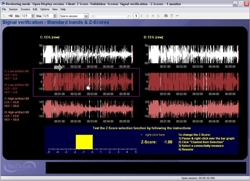
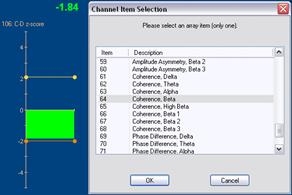
BioGraph Z-Score Neurofeedback is used conjointly with Dr. Robert Thatchers NeuroGuide z-score feedback library, BioGraph can translate EEG connectivity metrics into much more intuitive z-score values. Because z-scores are what brain maps report on, neurofeedback becomes an easy task as the screen shows a moment-to-moment reading on how far a clients performance is from the norms.

Z-Score Neurofeedback


  • Z-score outputs include absolute power, relative power, power ratio, amplitude asymmetry, coherence and phase difference. These metrics are available for eight bands including alpha, beta, delta, theta, high beta and beta I, II and III.
  • Any time during the training session, the clinician can click Pause and right-click over an instrument to select a different z-score metric or band to train with, on the fly.
  • Training screens show dual threshold bar graphs to allow practical range training.
  • Numeric displays can be programmed to follow bar graph color change on condition, to emulate NeuroGuide reporting.
  • All the feedback power of BioGraph is available to train from norms on-the-fly or use the z-scores for pre- and post-session assessment. Use measurements such as Percent of Time in Condition to report training results.
Read More: Reduce Your Stress

Zscore Add-On $ 895.00 - Buy Now

Tuesday, 18 February 2020

emWave2 Charcoal Gray

On the go or at your computer, take control of your wellness.
emWave technology is an innovative approach to improving wellness and facilitating personal growth
based on learning to change your heart rhythm pattern to create coherence; a scientifically measurable state characterized by increased order and harmony in our psychological and physiological processes.
emWave technology collects pulse data through a pulse sensor and translates the information from your heart rhythms into graphics on your computer or into easy to follow lights on the portable emWave Personal Stress Reliever. Used just a few minutes a day, this simple-to-use technology helps you transform feelings of anger, anxiety or frustration into more peace, ease and clarity.
As you practice on the go or at your computer you increase your coherence baseline and your ability to take charge of your emotional reactions. Health, communication, relationships and quality of life improve.
emWave2 Features
  • Use emWave2 on the go as a portable training device and store your sessions for later review.
  • Run a session while at your computer and watch your coherence through real-time charts.
  • Store all session information on your computer for future comparison and review.
  • Four challenge levels including a challenging Advanced User mode.
  • Adjustable brightness of the LED displays and audio feedback.
  • Make sessions entertaining with the coherence building tools.

emWave2 Charcoal Gray $ 199.00 -  Buy Now

emWave2 Silver Blue $ 199.00 Buy Now