Showing posts with label Neurofeedback Online Training. Show all posts

Thursday, 12 March 2026

Neurofeedback Equipment for Mental Health Professionals: Why Support and Training Matter


Neurofeedback has become an increasingly valuable tool for mental health providers who want objective insight into brain function and a powerful way to train self-regulation. By measuring brainwave activity in real time and providing feedback to the client, neurofeedback helps individuals learn to regulate attention, emotional responses, and stress patterns.

However, choosing neurofeedback equipment for a clinical practice involves much more than simply purchasing hardware. For many therapists, the most important factors are the quality of manufacturer support and the availability of training. Since many clinicians are not engineers or technicians, strong support and education can make the difference between a successful neurofeedback program and an expensive piece of unused technology.

What Neurofeedback Equipment Does

Neurofeedback is a form of biofeedback that focuses specifically on brainwave activity. Sensors placed on the scalp measure electrical signals from the brain (EEG), which are then processed by specialized software and displayed as visual or auditory feedback for the client. Over time, the brain learns to produce healthier patterns of activity.

Clinical neurofeedback systems typically include:

  • EEG amplifiers that measure brainwave signals

  • Electrodes or sensors placed on the scalp

  • Signal-processing software that analyzes brainwave activity

  • Feedback programs such as games, animations, or audiovisual signals

  • Data tracking and reporting tools for monitoring client progress

These systems are used in clinical settings for attention regulation, anxiety management, trauma recovery, peak performance, and other behavioral health applications.

Read More...

Neurofeedback technology offers powerful opportunities for mental health professionals to incorporate neuroscience into their clinical work. But selecting the right system involves more than comparing hardware specifications.

Contact us today for more information.


Thursday, 28 August 2025

Peripheral Biofeedback BCIA Program | BCIA Certification Biofeedback Seminar


Professional Peripheral Biofeedback BCIA Program

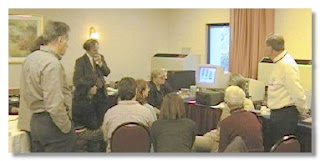
This innovative seminar is designed to teach clinicians biofeedback fundamentals and cutting-edge applications. This program covers all 42 hours of the BCIA Didactic Biofeedback Education requirement through powerful demonstrations of biofeedback and adjunctive procedures, imaginative hands-on lab exercises with multi-channel computerized equipment, professional multimedia presentations and comprehensive review materials. This program integrates personal hands-on training with equipment with didactic presentation.

Most of the people attending our training have a healthcare and or educational background. Many of the attendees are psychologists, social workers, mental health counselors, chiropractors and similar provider, although admission to our training is open to anyone interested without prerequisites.

For information or continuing education purposes we strongly encourage potential students to become BCIA certified. We advise them to review the current requirements for certification posted on the bcia.org website so that they know what else they will need in in addition to attending the course in order to qualify for certification if their goal is to work with patient/clients.

Read More...

If you’re seeking to improve your health and achieve optimal well-being, consider visiting us: Biofeedback Resources International

Wednesday, 2 July 2025

Biofeedback Applications in Education


Biofeedback is a process that uses technology to measure and feed back information about a person’s physiology so that they can learn how to gain increased control over it.  It is used clinically in healthcare settings by licensed mental or physical medicine professionals including psychologists, social workers, mental health counselors, physical therapists, chiropractors, nurses, occupational therapists, and rehab therapists.  It can also be used in educational settings.

Here is a list of biofeedback equipment modalities and what they measure:

  1. Surface EMG (Electromyography) – Action potentials produced when muscles contract.

  2. Skin Temperature – Temperature increases when blood vessels dilate with relaxation and decreases when blood vessels constrict in response to stress.

  3. Skin Conductance – Increases when sweat increases on the hands in response to emotional reaction.

  4. Heart Rate and Heart Rate Variability – Changes with changes in the autonomic nervous system.  It is related to vagal tone and can be affected by emotional state and breathing as well as physical activity

  5. Respiration – Measures depth, mechanics, and rate of breathing.

  6. Capnometer – Measures the amount of CO2 in the air that is exhaled through the nostrils into two tubes connected to an instrument.

  7. EEG (Electroencephalograph) – Measures action potentials produced when neurons in the brain fire as part of their communication and function.

Read more to discuss ways on how biofeedback equipment can be used.

If you’re seeking to improve your health and achieve optimal well-being, consider visiting us: Biofeedback Resources International

Thursday, 19 June 2025

Using Biofeedback for Pain Management: A Team Approach with Physical Therapists, Pain Specialists, and Psychologists


In the evolving world of complementary medicine, biofeedback has emerged as a powerful tool in the management of chronic pain. By combining technology with self-awareness training, biofeedback enables patients to control physiological processes that typically operate involuntarily—such as muscle tension, heart rate, and skin temperature. Increasingly, physical therapists, pain management medical doctors, and psychologists are integrating biofeedback into comprehensive treatment plans for conditions like tension headaches, neck pain, back pain, muscle spasms, and even stress-related disorders like anxiety and insomnia.

The Role of Physical Therapists in Biofeedback

Physical therapists often work with patients experiencing musculoskeletal pain, including neck and back pain or muscle spasms related to poor posture or injury. Surface electromyography (sEMG) biofeedback is commonly used in physical therapy to help patients monitor and reduce excess muscle tension. By visualizing their own muscle activity on a screen, patients learn to relax overly tense muscles, which can reduce pain and improve function.

For example, individuals suffering from chronic neck pain due to stress-induced postural tension often find that biofeedback helps them become more aware of unconscious clenching or stiffening. This self-awareness, reinforced by professional guidance, leads to better body mechanics and lasting pain relief.

Read More...

If you’re seeking to improve your health and achieve optimal well-being, consider visiting us: Biofeedback Resources International


Tuesday, 8 August 2023

Neurofeedback Training | neurofeedback training Puerto Rico

The brain is in aspiration of fact an amazing organ that science is uncovering extra insinuation practically all day.

Our brains are functioning in not quite all deed of our bodies both flesh and blood and unconscious.  To shape our arms, stand, dance, speak, or recall we actively use our brains.  Digestion, vibrant, pulse rate, blood pressure, and abnormal are things that we dont even have to think just about.  Our brains admit care of adaptable these functions.

It used to be thought that after parenthood no real alter happened in the brain.  The thought was that we are stranded bearing in mind all we have.  More recent science shows that the brain can revise.  Things after that chronic emphasize can cause negative mammal changes in the brain.  Things as soon as studying a musical instrument, a subsidiary language or different capacity can cause easy to use changes in the brain.

Neurofeedback training Florida is a method of using technology to operate the electrical signals produced by the brain as neurons communicate, and feeding furthermore that opinion in order to train the brain to make flattering changes.  The electrical signals are measured via small sensors placed in bank account to the scalp.  These sensors be neighboring to to an instrument that connects to a computer.  The signals are processed and displayed in the form of heritage graphs, bar graphs, and digital displays.  

 The process uses goals that are set to either sustain increasing or decreasing the attainment of flattering frequencies ie theta, alpha, beta.  When the goals are met feedback is unchangeable to roomy the trainee that their brain is in the desired come clean.  The feedback can receive the form of a spacious turning upon or changing color, an cheerfulness, movie, or game playing, or a hermetic or music playing.  This feedback is reinforcing to the brain and encourages the brain to repeat what it just did to profit the feedback.

 Neurofeedback training is being used in adviser to supplementary therapies to plus people as soon as symptoms amalgamated to nap, bring out, attention, emotional issues, trauma, learning difficulties, and substance abuse.

It can as well as be used to serve people who distressed sensation to perform a share augmented by helping them to be more relaxed and focused.  This can minister to in addition to battle in sports, music, academics, or change.

Get More Info : Neurofeedback Training | neurofeedback training Puerto Rico


Thursday, 12 January 2023

What is Biofeedback, Neurofeedback and Applied Psychophysiology?


"Wonderful opportunity. Positive learning environment. Technically on target, practical, good depth. I appreciated inclusion of theoretical and philosophical discussion. Super learning experience." - Dick A. Genardi, Ph.D., Director Behavioral Health Associates, Inc.,Dayton, Ohio

There have been scores of books written on Biofeedback, Neurofeedback and Applied Psychophysiology. We introduce you to those we feel are the best and most relevant of them through our training,website etc. New books for the general public and several for professionals have been published recently. Most of the focus at present is on Neurofeedback because it is the most dramatic and fastest growing type of biofeedback. One of those books is our own, MINDFITNESS TRAINING: Neurofeedback and The Process.

There have been thousands of scientific studies in this field - many of them published in the most refereed journals in their respective disciplines. Some world class scientists, practitioners and neurophilosophers believe that biofeedback and neurofeedback discoveries rank among the most important technological, educational and medical breakthroughs of the last several centuries. If you consider that self-knowledge and heuristic (self) learning are generally considered to be the most important skills most human beings can develop, then it is easy to understand why biofeedback is receiving so much attention.

The simplest explanation is that biofeedback is the use of instrumentation to feed back information about the psychophysiology (mind and body) of a human being to him or herself. Given this information most individuals can increase their control (self-regulation) of whatever activity is being monitored. Things begin to get exciting when we look into the implications of these extraordinary levels of control and what the benefits are to those learning these high levels of self-regulation.

The resulting profound mind/body changes are applicable to over four hundred common clinical disorders and the list is growing continuously. There are also extraordinary applications to Performance and Life Enhancement. This means there are many forms of biofeedback and many types of instrumentation. Some of the most common are: electromyograph (EMG) Electrical activity of the muscles (Voluntary Nervous System), Electroencephalograph (EEG) Electrical activity of the brain (Central Nervous System), Temperature (TEMP) Peripheral blood flow, Electrodermal Response (EDR, SCR, GSR, etc., Sweat Gland activity, Heart Rate (HR) including the extraordinarily exciting new field of neurocardiology), and Blood Pressure (BP) all Autonomic Nervous System measures. Applied Psychophysiology is the large field of study of the mind and body and the practical applications of that research. Biofeedback and Transactional Psychophysiology are important parts of this greater field.

Get More Info Click here :  What is Biofeedback, Neurofeedback and Applied Psychophysiology?

Tuesday, 7 December 2021

The Marriage of Technology and Consciousness

R. Adam Crane BCIA, ACN, NRNP

The following chapter is excerpted by permission from Mr. Crane’s forthcoming book.

What is “R – Tech” (Relationship Technology) and Consciousness Processing Technology? What are the implications for Neurofeedback, Biofeedback, Applied Psychophysiology, the evolution of science, our individual and collective mental health?

August 10, 1994 I had the opportunity to present at the Forum co sponsored by the Wisdom Society and the Reuben H. Fleet Space Theater and Science Center. The Forum was conceived as an opportunity to exchange ideas on “The Place of Science and Technology in our Culture”.

Since I feel that the material that emerged in that presentation may be useful to others and (all things being relative) I feel the evening went well, I would like to offer this edited version of that talk.

We intend to communicate with each other at the highest level we can and to create an atmosphere that is as conducive as possible to individual and group creative thinking. Together we make up a kind of mind field (not mine field I hope). If it is true that the learning is the doing and multi sensory, multi dimensional awareness is part of the technology of consciousness, perhaps we can practice these principles as we work together. Then possibly something altogether unexpected, creative may emerge.

May I suggest that as you read this you experiment with me? You will probably be more comfortable and get more out of this short time together if you scan your body, notice if you are holding your shoulders up, look for unnecessary muscle tension, breathe normally, deeply and comfortably. Be aware of all that you can in the room. Loose your belt if it is too tight. Breathing should be relaxed and deep and your stomach should be free to move in and out. If you have eaten or you are tired and feel like taking a nap or even meditating and you close your eyes, be as aware as you can of what is going on around you and within you.

As you are able, please watch the thoughts and feelings that arise inside you (and outside too) as we work together in a spirit of play. To paraphrase Marshal McLuhan, “Those who think education and entertainment are two different things probably do not understand either one very well”. Parts of this discussion may be difficult, controversial, even fun. What is most important is to watch your feelings arise and change.

I would like to examine one of the greatest (depending on how you define technology) perhaps the greatest challenge humanity faces.

In October of 1970 one of my best friends died of cancer. Tom was only 41. Afterwards I took a long weekend at our little country house in Rhinebeck, New York. I had spent a rather dreamy day sitting by the lake contemplating The Big Picture. Dagne, my wife, suggested that I read a magazine article entitled “Alpha, The Wave of the Future”. I promptly read it because I had learned that she had an uncanny way of planting very good ideas in my mind at just the right time.

During the next twenty four-hours I had a kind of classic creative experience. Decades of contemplation and thought seemed to converge with a euphoric, laser like intensity. It seemed as though one of the greatest scientific and spiritual stories of our time was creating itself before my eyes. And I was being invited to immerse myself in an almost unimaginably great work.

The next day I entered full time into what has turned out to be an astonishing, scientific art form, a business and a series of adventures leading me to this discussion here with you. I sold my old business and plunged headlong into the strange, paradoxical, controversial field soon to be called by inadequate terms like Biofeedback, Applied Psychophysiology and Instrument Assisted Transactional Psychophysiology. I like to think of it as.

More Info :  The Marriage of Technology and Consciousness